
Stress Fractures in Young People: When Should You Look More Closely at Bone Health?
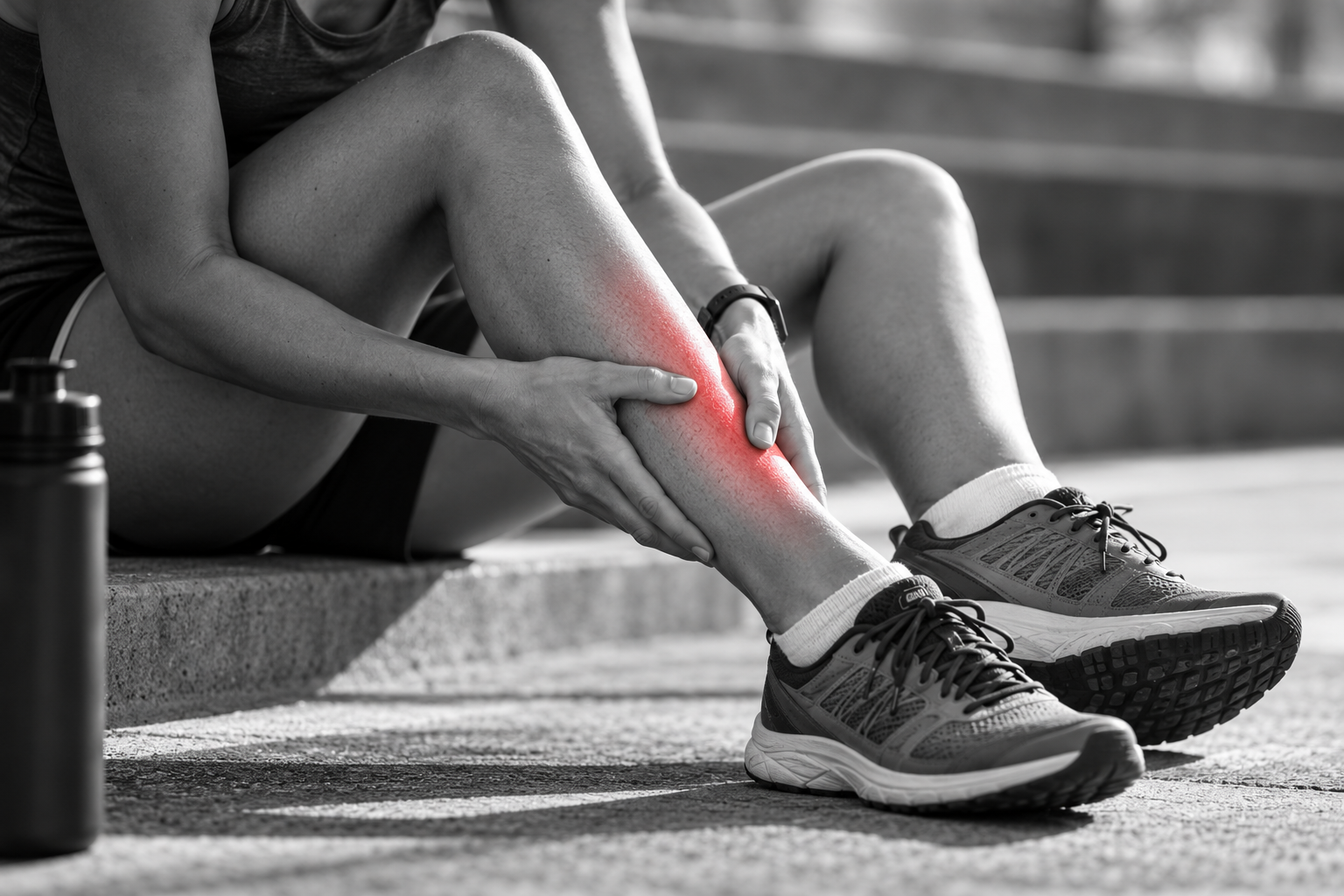
Stress fractures are common in active teenagers and young adults. They are particularly associated with running, dance, gymnastics, football and other sports involving repeated impact, and in many cases the explanation is straightforward: training has increased faster than the skeleton has been able to adapt.
That does not mean every stress fracture should trigger a detailed medical investigation. Most do not.
However, when stress fractures recur, occur in several different bones, develop after relatively modest levels of activity, or are accompanied by other clues such as weight loss, menstrual disturbance or restrictive eating, it is worth thinking beyond the injury itself.
The more useful question then becomes not simply “How do we get this fracture to heal?”, but “Is there a reason this person’s bone is struggling to tolerate normal loading?”
What is a stress fracture?
Bone is a living tissue. It is constantly being broken down and rebuilt in response to the stresses placed upon it.
Exercise is normally very good for bone. Weight-bearing and impact activity help the skeleton become stronger and are particularly important during childhood, adolescence and early adulthood, when peak bone mass is being developed.
Problems arise when repetitive loading occurs faster than the bone can repair itself.
This can begin as a bone stress reaction, where the bone becomes painful before a clear fracture line has developed, and can progress to a more established stress fracture if loading continues. For this reason, clinicians increasingly use the broader term bone stress injury.
This is different from an acute traumatic fracture caused by a single fall, tackle or collision. It develops gradually because the balance between loading and bone repair has been disturbed.
Training load is often the explanation
A sudden change in exercise is one of the commonest reasons for a stress fracture.
A runner may rapidly increase weekly mileage, start hill training or introduce more speed work. A teenager may move from recreational sport to intensive school or club training. Someone preparing for their first marathon may increase both distance and frequency over a relatively short period.
Changes in footwear, running surface, biomechanics and recovery time may all contribute.
In this setting, the problem may be predominantly mechanical. The bone itself is healthy, but it has been asked to adapt too quickly.
This is why a single stress fracture in an otherwise healthy young person, particularly after an obvious increase in training, does not automatically imply osteoporosis or another underlying disorder.
The pattern becomes more interesting when the injury is difficult to explain.
Why do some young people develop repeated stress fractures?
Bone strength is influenced by much more than exercise.
Adequate nutrition, sufficient energy intake, vitamin and mineral availability, normal hormonal function and recovery all contribute to the way bone responds to training.
One increasingly recognised issue in young athletes is low energy availability.
This occurs when the energy consumed through food is insufficient to cover both the demands of exercise and the body's normal physiological needs.
Sometimes this is intentional, for example when an athlete restricts food in an attempt to become lighter or improve performance. At other times it is completely unintentional. A young person may simply be training considerably more than before without increasing their food intake enough to compensate.
When low energy availability is prolonged or significant enough to affect normal physiology, it can form part of Relative Energy Deficiency in Sport, or RED-S.
The International Olympic Committee describes RED-S as a syndrome arising from problematic low energy availability that can affect several systems, including reproductive and musculoskeletal health, and can increase the risk of bone stress injury. It occurs in both female and male athletes. British Journal of Sports Medicine
RED-S is not confined to elite athletes
The word “sport” can make RED-S sound like a condition affecting only professional athletes.
In practice, the underlying problem can occur in a much wider range of people.
It might be a teenager training several times a week for school sport, a university runner, a dancer, a gymnast, someone preparing for a marathon, or simply a very active young adult combining frequent exercise with calorie restriction.
The important issue is the relationship between energy intake and energy expenditure, rather than the level at which the person competes.
This is also why focusing only on weight can be misleading. Someone does not need to appear visibly underweight to have inadequate energy availability.
Menstrual history can give an important clue
In adolescent girls and young women, menstrual history can be particularly informative.
Periods becoming infrequent or stopping in someone exercising heavily should not simply be accepted as a normal consequence of training.
Oestrogen is important for bone development and maintenance, and adolescence is a particularly important period because much of adult peak bone mass is accumulated during these years.
When low energy availability and menstrual disturbance persist, bone adaptation may be impaired and the likelihood of bone stress injury can increase.
Historically, this was described as part of the “female athlete triad”. RED-S is now a broader concept because similar problems can occur in men and because inadequate energy availability can affect multiple physiological systems rather than bone and reproductive health alone. British Journal of Sports Medicine
Nutrition is about more than calcium
When someone develops a stress fracture, attention often immediately turns to calcium and vitamin D.
Both are important, but bone health is more complicated than simply taking a supplement.
The skeleton requires sufficient overall energy and protein as well as calcium, vitamin D and normal hormonal function. A person who is training intensively while chronically under-fuelling may therefore continue to have difficulty with bone health even if they take calcium tablets.
Vitamin D deficiency may be relevant in some young people and can be checked when appropriate, but correcting an isolated blood result will not address inadequate energy availability if that is the underlying problem.
The broader nutritional picture matters.
When does a stress fracture deserve a wider assessment?
The majority of straightforward stress fractures do not require an extensive osteoporosis work-up.
A wider assessment becomes more reasonable when the pattern is unusual.
Repeated stress fractures, fractures occurring at several sites, injuries developing after relatively modest exercise, significant weight loss, restrictive eating, prolonged menstrual disturbance, delayed puberty or a history of an eating disorder may all justify looking more closely at bone health.
The same applies when there is long-term steroid exposure or another medical condition known to affect bone.
The location of the stress injury also matters. Some sites are more clinically significant because they have a greater tendency to progress or heal poorly. Femoral-neck stress injuries are an example where prompt specialist assessment is particularly important.
The point is not that these features necessarily indicate an underlying bone disease. Rather, they reduce the likelihood that the injury can be explained simply by training load alone.
Low bone density in a young person does not automatically mean osteoporosis
This distinction is particularly important because increasing numbers of younger people now undergo DEXA scans through sports clinics, health screening programmes or private “lifestyle” assessments.
Bone-density results in younger adults should not be interpreted in exactly the same way as those of older postmenopausal women.
In premenopausal women and younger men, greater emphasis is generally placed on whether bone density is appropriate for age rather than applying the conventional osteoporosis T-score thresholds used in older adults.
NOGG advises that DEXA can be appropriate in younger people when there has been a fragility fracture or a strong clinical reason to suspect low bone density, such as malnutrition, malabsorption, glucocorticoid exposure or another disease associated with bone loss. It also emphasises that osteoporosis and fragility fractures are uncommon in younger people and that unexpected findings should prompt consideration of secondary causes. NOGG
A low bone-density result therefore needs interpretation rather than simply a diagnostic label.
When is a DEXA scan useful after a stress fracture?
A first stress fracture in an otherwise healthy young person with a clear training-related explanation will not usually require a DEXA scan.
The argument for assessing bone density becomes stronger when stress fractures recur, when there are additional clinical risk factors, or when there is concern about nutrition, energy availability or hormonal health.
In these situations, DEXA is only one part of the assessment. It may tell us that bone density is lower than expected, but it does not tell us why.
That distinction matters because the management of a 22-year-old runner with low energy availability is very different from the management of an older adult with typical postmenopausal osteoporosis.
NICE similarly reserves routine fracture-risk assessment and bone-density investigation in younger people for circumstances where there are significant clinical risk factors rather than recommending population screening. Nice
Looking for an underlying cause
When the clinical history suggests that a stress fracture may be part of a broader bone-health problem, the assessment should be targeted rather than formulaic.
Training history is important, but so are changes in weight, dietary intake, menstrual or hormonal history and any symptoms suggesting another medical condition.
Depending on the circumstances, blood tests may include vitamin D and calcium, as well as tests directed towards thyroid disease, coeliac disease, hormonal abnormalities or other secondary causes.
There is no single blood test that explains a stress fracture.
The investigation should follow the clinical story.
Eating disorders and bone health
Eating disorders warrant particular consideration because adolescence and early adulthood are important periods for skeletal development.
Prolonged undernutrition can affect hormone levels, bone formation and the development of peak bone mass. In someone who is also exercising intensively, this can substantially alter the balance between bone loading and repair.
It is therefore important that treatment is directed at the underlying nutritional problem rather than simply repeatedly resting individual stress fractures.
The same principle applies more broadly to RED-S: healing the current injury is only part of management if the factors that contributed to it remain unchanged.
Recovery is about more than resting the fracture
Most stress fractures require temporary reduction or cessation of the activity that provoked them, followed by a graded return to exercise as healing progresses.
That mechanical recovery is important, but it is only one part of treatment.
Where low energy availability is contributing, improving nutritional intake and restoring an appropriate balance between training and recovery are central. Menstrual or other hormonal disturbance may require further assessment, while identified medical causes of impaired bone health need to be treated in their own right.
For some athletes, management is therefore best approached by a combination of sports medicine, physiotherapy and dietetic input, with endocrine or other specialist assessment where needed.
The goal should not simply be to return to training as rapidly as possible.
It should be to return to training with a skeleton that is better able to tolerate it.
Why recurrent stress fractures in adolescence deserve attention
The teenage years and early twenties are particularly important for bone health because the skeleton is still developing towards peak bone mass.
That does not mean every adolescent stress fracture is medically concerning. Sport places substantial demands on developing bones, and uncomplicated stress injuries are common.
However, repeated injuries during this period deserve a little more thought.
If a young person repeatedly develops bone stress injuries, especially alongside poor nutrition, menstrual disturbance or unexpectedly low bone density, it is sensible to ask whether something is interfering with normal skeletal development.
Identifying and correcting that problem may be more important in the long term than the treatment of any individual fracture.
When a specialist bone-health opinion may help
Most stress fractures will initially be managed through primary care, sports medicine, physiotherapy or orthopaedics, and that is entirely appropriate.
A broader medical assessment becomes more useful when the pattern does not fit the usual story.
That might include recurrent or unexplained stress fractures, unexpectedly low bone density, suspected secondary causes of bone loss, significant steroid exposure, or uncertainty about how to interpret a DEXA result in a younger person.
In younger adults, osteoporosis and fragility fractures are sufficiently unusual that specialist investigation is generally appropriate when they genuinely occur.
In private practice, a specialist bone-health assessment in this situation should do more than simply repeat a scan or consider medication. The aim is to review the pattern of fractures, training and nutritional history, relevant blood results and imaging, and decide whether there is evidence of an underlying problem with bone health that warrants further investigation or treatment.
Often, the most useful outcome is reassurance and a clear plan rather than medication.
The key message
Most stress fractures in young people are related to repetitive loading and changes in training rather than an underlying bone disease.
But the context matters.
When bone stress injuries recur, seem disproportionate to the level of exercise, or occur alongside changes in weight, nutrition, menstrual or hormonal function, it is reasonable to look more carefully at bone health.
In those circumstances, the question is not whether a young person “has osteoporosis” based on a single scan result.
It is whether there is a modifiable reason why their skeleton is repeatedly struggling to adapt to load.
Finding that reason can help both the current injury and, more importantly, reduce the likelihood of the same problem recurring.
Please note, these posts are for general information only and do not constitute medical advice. Dr Singh would encourage you to speak to your healthcare professional to be assessed and managed for your specific symptoms.