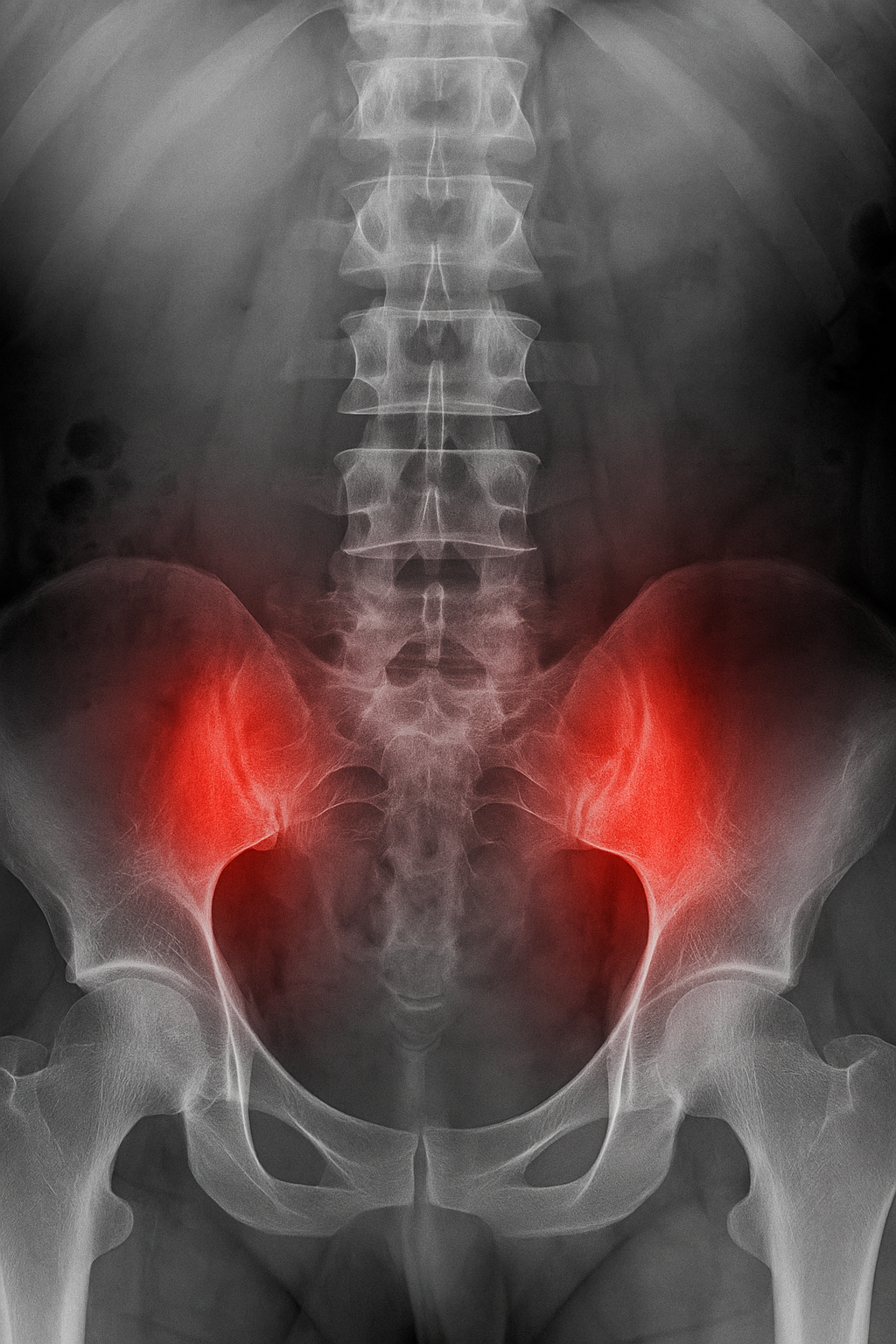
Private Axial Spondyloarthritis Specialist in London
Looking for a private axial spondyloarthritis specialist in London? Dr Animesh Singh is a Consultant Rheumatologist and General Internal Medicine Physician at the Royal Free Hospital, offering consultant-led assessment and treatment for suspected or established axial spondyloarthritis.
Axial spondyloarthritis is an inflammatory condition that mainly affects the spine and sacroiliac joints. It can cause back pain, buttock pain, prolonged stiffness, night pain and symptoms that improve with movement rather than rest.
Axial spondyloarthritis can be difficult to recognise because symptoms may be mistaken for mechanical back pain, sports injury, sciatica or posture-related pain. It may also be associated with heel pain, tendon inflammation, psoriasis, inflammatory bowel disease or eye inflammation.
Early specialist assessment can help identify whether back pain is inflammatory, decide whether tests such as HLA-B27, inflammatory markers or MRI are needed, and guide treatment where appropriate.
Highly rated by patients on Doctify and Google, with 800+ patient reviews.

Dr Animesh Singh is a Consultant Rheumatologist and General Internal Medicine Physician at the Royal Free Hospital, where he is Clinical Lead for Rheumatology.
He offers private assessment and treatment in London for patients with suspected or established axial spondyloarthritis, including inflammatory back pain, sacroiliac pain, prolonged stiffness, heel pain, tendon symptoms, HLA-B27 positive blood tests, MRI changes, uveitis, psoriasis or inflammatory bowel disease-related symptoms.
With more than a decade of consultant experience in tertiary rheumatology care, his approach is to clarify whether symptoms are inflammatory, decide whether further testing or imaging is needed, and guide treatment or monitoring where appropriate.
When Back Pain May Suggest Axial Spondyloarthritis
Axial spondyloarthritis can be difficult to recognise because back pain is common and is often mechanical. The pattern of symptoms is important. Specialist assessment may be helpful if you have:
🔹 Back or Buttock Pain
back pain or stiffness starting before the age of 45
symptoms lasting for more than three months
pain or stiffness that improves with movement
symptoms that do not improve, or worsen, with rest
night pain, especially in the second half of the night
alternating buttock pain
prolonged morning stiffness
🔹 Associated Inflammatory Features
heel pain or Achilles tendon pain
pain where tendons or ligaments attach to bone, known as enthesitis
swollen joints outside the spine, such as knees, ankles or toes
current or previous psoriasis
inflammatory bowel disease
episodes of eye inflammation, such as uveitis
🔹 Test or Imaging Findings
positive HLA-B27 result
raised inflammatory markers, such as CRP or ESR
previous X-ray or MRI changes suggesting sacroiliitis
unexplained inflammatory back pain despite normal routine tests

Axial Spondyloarthritis Diagnosis
Axial spondyloarthritis is diagnosed by looking at the overall clinical picture, including the pattern of back pain, stiffness, associated inflammatory features, examination findings, blood tests and imaging.
A positive HLA-B27 result can support the diagnosis in the right clinical context, but it does not prove axial spondyloarthritis by itself. Some people with axial spondyloarthritis are HLA-B27 negative, and many people who are HLA-B27 positive never develop the condition.
Blood tests such as CRP and ESR can be helpful, but they may be normal even when axial spondyloarthritis is present.
Imaging may include X-rays or MRI of the sacroiliac joints and spine where clinically appropriate. X-rays can be normal in earlier or non-radiographic axial spondyloarthritis, so MRI may be useful when symptoms suggest inflammation but plain X-rays do not show definite changes.
Specialist assessment can help distinguish axial spondyloarthritis from other causes of back or buttock pain, including mechanical back pain, disc problems, sciatica, osteoarthritis, sports injury, fibromyalgia, psoriatic arthritis and inflammatory bowel disease-related arthritis.
Tests for Axial Spondyloarthritis
-
HLA-B27
HLA-B27 is a genetic marker associated with axial spondyloarthritis. A positive result can support the diagnosis when the pattern of symptoms fits, but it does not prove the diagnosis by itself.
Some people with axial spondyloarthritis are HLA-B27 negative, and many people who are HLA-B27 positive never develop axial spondyloarthritis.
-
CRP and ESR
CRP and ESR are blood tests that look for inflammation. They can be raised in axial spondyloarthritis, but they can also be normal, even when symptoms are inflammatory.
Normal inflammatory markers do not always exclude axial spondyloarthritis.
-
X-rays and MRI
X-rays may show established changes in the sacroiliac joints or spine, but they can be normal in earlier disease.
MRI can be helpful where axial spondyloarthritis is suspected but X-rays are normal or unclear. MRI may show inflammation in the sacroiliac joints or spine where clinically appropriate.
Why Specialist Interpretation Matters
Test results need to be interpreted in context. A positive HLA-B27 result, raised inflammatory markers or MRI changes may support the diagnosis, but none should be considered in isolation.
Dr Singh can review previous blood tests, X-rays or MRI reports and advise whether further investigation is needed.
Understanding Axial Spondyloarthritis
Axial spondyloarthritis is an inflammatory condition that mainly affects the spine and sacroiliac joints. The sacroiliac joints sit where the lower spine meets the pelvis and are a common site of inflammation in axial spondyloarthritis.
Axial spondyloarthritis is often shortened to axSpA. It includes ankylosing spondylitis, where changes may be visible on X-ray, and non-radiographic axial spondyloarthritis, where X-rays may be normal but symptoms, examination findings, blood tests or MRI may still suggest inflammatory disease.
Symptoms often start in early adulthood, but diagnosis can be delayed because back pain is common and may be mistaken for mechanical back pain, disc problems, sports injury, posture-related pain or sciatica.
The aim of assessment is to decide whether back pain is inflammatory, whether there are associated features such as uveitis, psoriasis, inflammatory bowel disease or enthesitis, and whether treatment or monitoring is needed.
Different Features of Axial Spondyloarthritis
Axial spondyloarthritis is not limited to back pain. It can affect the sacroiliac joints, spine, tendons, and peripheral joints, and may be associated with other inflammatory conditions. Understanding the pattern of symptoms is important because it can influence investigation, diagnosis and treatment choice.
-
Inflammatory Back Pain
Back pain or stiffness that improves with movement, worsens with rest, causes night waking or is associated with prolonged morning stiffness.
-
Sacroiliac Joint Pain
Pain around the buttocks, pelvis or lower back, sometimes affecting one side or alternating between sides.
-
Enthesitis
Pain where tendons or ligaments attach to bone, such as Achilles tendon pain, heel pain, plantar fascia pain or pain around the pelvis.
-
Peripheral Arthritis
Swelling, pain or stiffness in joints outside the spine, such as the knees, ankles, feet or toes.
-
Eye Inflammation
Episodes of red, painful or light-sensitive eyes may suggest uveitis and should be assessed promptly.
-
Psoriasis or Bowel Disease
Axial spondyloarthritis can be associated with psoriasis or inflammatory bowel disease. These features can influence diagnosis and treatment decisions.
Assessment and Treatment of Axial Spondyloarthritis
Assessment starts with a detailed review of your back pain, stiffness, night pain, buttock pain, response to movement or rest, previous injuries, family history and associated inflammatory features.
Dr Singh will examine the spine, sacroiliac joints and other relevant areas, and may arrange blood tests, X-rays or MRI where clinically appropriate. The aim is to clarify whether symptoms are inflammatory, whether axial spondyloarthritis is likely and what treatment or monitoring may be needed.
Treatment depends on the pattern and severity of symptoms, imaging findings, blood test results, associated conditions and previous response to treatment.
Options may include anti-inflammatory medication, physiotherapy, structured exercise, posture and mobility work, targeted injections in selected situations, and biologic or targeted therapies where clinically appropriate.
Axial spondyloarthritis can cause persistent inflammation before clear changes are visible on X-ray. It may also be mistaken for mechanical back pain, disc problems, sports injury, sciatica or posture-related pain.
Early specialist assessment can help identify inflammatory back pain, reduce delays in diagnosis, guide appropriate imaging and treatment, and support long-term function.
Exercise, Anti-Inflammatory Treatment and Biologic Therapies
Treatment for axial spondyloarthritis aims to reduce inflammation, improve pain and stiffness, maintain spinal mobility and protect long-term function.
Exercise and physiotherapy are important parts of management. This may include mobility work, posture exercises, strengthening, stretching and activity planning to help maintain spinal movement and day-to-day function.
Anti-inflammatory medication (NSAIDs) may be considered where clinically appropriate, taking into account symptoms, medical history, kidney function, blood pressure, stomach risk and other medications.
Targeted injections may occasionally be considered in selected situations, such as persistent sacroiliac joint or peripheral joint inflammation, where clinically appropriate.
If axial spondyloarthritis remains active despite NSAIDs, biologic or targeted therapies may be considered. These include treatments that act on inflammatory pathways such as TNF, IL-17 or JAK pathways. Treatment choice may also need to take account of associated conditions such as psoriasis, inflammatory bowel disease or uveitis.
Ongoing monitoring is important. This may include review of pain, stiffness, function, flares, blood tests, imaging where needed, medication safety and treatment response.
Concerned About Possible Axial Spondyloarthritis?
If you have persistent back pain or stiffness, night pain, alternating buttock pain, a positive HLA-B27 result, MRI changes, uveitis, psoriasis, inflammatory bowel disease, heel pain or symptoms that have not been clearly explained, a specialist assessment can help clarify the next steps.
Dr Singh sees self-pay and insured patients at his private clinics in Harley Street, Hampstead and Chiswick.

Why See Dr Animesh Singh Privately?
Dr Animesh Singh is a Consultant Rheumatologist and General Internal Medicine Physician at the Royal Free Hospital, where he is Clinical Lead for Rheumatology. He has more than a decade of consultant experience in tertiary rheumatology care, including inflammatory arthritis, axial spondyloarthritis, autoimmune rheumatic disease and complex diagnostic presentations.
He assesses patients with suspected or established axial spondyloarthritis, including inflammatory back pain, sacroiliac pain, prolonged stiffness, heel pain, enthesitis, positive HLA-B27 results, MRI changes, uveitis, psoriasis, inflammatory bowel disease-related symptoms, treatment decisions, flares, second opinions and ongoing management.
His dual accreditation in rheumatology and general internal medicine allows him to consider axial spondyloarthritis in the context of wider health, fatigue, infection risk, inflammatory bowel disease, eye inflammation, skin symptoms, cardiovascular risk, other medical conditions and medication safety.
In private practice, Dr Singh focuses on careful assessment, clear explanation and targeted investigation where needed. The aim is to clarify whether symptoms are inflammatory, decide whether axial spondyloarthritis is likely or active, and agree a practical treatment plan or next steps.
Consultant Rheumatologist and General Internal Medicine Physician at the Royal Free Hospital
Clinical Lead for Rheumatology at the Royal Free Hospital
More than a decade of consultant experience in tertiary rheumatology care
Dual-accredited in rheumatology and general internal medicine
Experience assessing inflammatory back pain, sacroiliac pain and suspected axial spondyloarthritis
Experience managing complex inflammatory arthritis and associated systemic features
Highly rated by patients on Doctify and Google, with more than 800 patient reviews
Private Axial Spondyloarthritis Appointments in London
Clinics in Harley Street, Hampstead and Chiswick
Dr Singh offers private axial spondyloarthritis appointments at clinics in Central London, North London and West London.
Appointments are available for patients with suspected axial spondyloarthritis, inflammatory back pain, sacroiliac pain, prolonged stiffness, positive HLA-B27 results, MRI changes, uveitis, psoriasis, inflammatory bowel disease-related symptoms, treatment questions or second-opinion requests.
Self-pay and insured patients are welcome. Self-pay patients can book directly without a GP referral, while insured patients should check whether their policy requires a GP referral, pre-authorisation or separate approval for investigations, imaging, injections or procedures.
Private axial spondyloarthritis appointments in Central London, near Harley Street, Marylebone and Oxford Circus.
This clinic may be particularly suitable for patients seeking a Central London appointment, international or embassy patients, and those travelling from elsewhere in the UK or overseas.
Private axial spondyloarthritis appointments at the Royal Free Hospital — Lyndhurst Rooms, convenient for Hampstead, Belsize Park, Highgate, Camden, Finchley and the wider North London area.
This clinic may be particularly suitable for patients who value access to a major teaching hospital environment and Dr Singh’s Royal Free tertiary rheumatology expertise.
Private axial spondyloarthritis appointments at Chiswick Outpatients, convenient for Chiswick, Richmond, Ealing, Acton, Hammersmith, Kew, Barnes and the wider West London area.
This clinic may be particularly suitable for patients who prefer local West London access, on-site patient parking and access to blood tests, X-rays and MRI where clinically appropriate and available.

Common Questions About Axial Spondyloarthritis Assessment
These answers cover some of the questions patients often ask before booking a private appointment for suspected or established axial spondyloarthritis.
-
Axial spondyloarthritis is an inflammatory condition that mainly affects the spine and sacroiliac joints. These joints sit where the lower spine meets the pelvis.
It can cause back pain, buttock pain, stiffness, night pain and reduced spinal mobility. It may also be associated with heel pain, tendon inflammation, peripheral joint symptoms, uveitis, psoriasis or inflammatory bowel disease.
-
Axial spondyloarthritis is the broader term. It includes ankylosing spondylitis, where changes may be visible on X-ray, and non-radiographic axial spondyloarthritis, where X-rays may be normal but symptoms, examination findings, blood tests or MRI may still suggest inflammatory disease.
Many patients still use the term ankylosing spondylitis, but axial spondyloarthritis is often used to describe the wider spectrum of disease.
-
Axial spondyloarthritis is diagnosed by looking at the overall clinical picture, not from one test alone.
Assessment may include the pattern of back pain and stiffness, examination findings, family history, associated features such as uveitis, psoriasis or inflammatory bowel disease, blood tests and imaging such as X-rays or MRI where clinically appropriate.
-
Back pain may be inflammatory if it starts before the age of 45, lasts for more than three months, improves with movement, does not improve with rest, wakes you at night or is associated with prolonged morning stiffness.
Alternating buttock pain, heel pain, uveitis, psoriasis, inflammatory bowel disease or a family history of related inflammatory conditions may also increase suspicion.
-
Yes. CRP and ESR can be normal in axial spondyloarthritis, even when symptoms are inflammatory.
Normal inflammatory markers do not exclude axial spondyloarthritis. The diagnosis depends on the overall pattern of symptoms, examination findings, HLA-B27 status and imaging where needed.
-
HLA-B27 is a genetic marker associated with axial spondyloarthritis. A positive result can support the diagnosis if the symptom pattern fits.
However, HLA-B27 does not prove the diagnosis by itself. Many people who are HLA-B27 positive never develop axial spondyloarthritis, and some people with axial spondyloarthritis are HLA-B27 negative.
-
Not everyone needs an MRI, but MRI can be helpful when axial spondyloarthritis is suspected and X-rays are normal or unclear.
MRI of the sacroiliac joints or spine may show inflammation where clinically appropriate. The decision to arrange MRI depends on your symptoms, examination findings, previous imaging and overall likelihood of inflammatory disease.
-
Yes. X-rays can be normal in earlier disease or in non-radiographic axial spondyloarthritis.
This is one reason why MRI may sometimes be useful when symptoms suggest inflammatory back pain but X-rays do not show definite changes.
-
Mechanical back pain is often linked to strain, posture, disc problems, injury or degenerative change. It may worsen with activity and improve with rest.
Inflammatory back pain is more likely to cause prolonged stiffness, night pain, improvement with movement and symptoms that do not settle with rest. The distinction is not always clear without specialist assessment.
-
Yes. Axial spondyloarthritis can be associated with heel pain, tendon inflammation, swollen peripheral joints, uveitis, psoriasis and inflammatory bowel disease.
These associated features can be important when deciding whether back pain is inflammatory and what treatment options may be suitable.
-
Yes. Axial spondyloarthritis is treatable. Treatment aims to reduce inflammation, improve pain and stiffness, maintain spinal mobility and protect long-term function.
Management may include exercise, physiotherapy, anti-inflammatory medication and, in selected patients, biologic or targeted therapies.
-
Treatment depends on disease activity, symptom pattern, imaging findings, blood tests, medical history and associated conditions.
Options may include physiotherapy, structured exercise, anti-inflammatory medication, targeted injections in selected cases, and biologic or targeted therapies where clinically appropriate.
-
Biologic or targeted therapies may be considered if axial spondyloarthritis remains active despite standard treatment, or where there are specific reasons to consider these treatments.
The choice of treatment may need to take account of associated psoriasis, inflammatory bowel disease, uveitis, infection risk, blood test results, previous treatment response and other medical factors.
-
Yes. Dr Singh sees patients with established axial spondyloarthritis as well as patients with suspected axial spondyloarthritis.
A private review can help assess disease control, flares, treatment response, medication concerns, imaging findings, biologic or targeted therapy options, or whether a change in treatment may be needed.
-
Yes. Many patients seek a second opinion about diagnosis, HLA-B27 results, MRI findings, treatment options or ongoing symptoms.
A second opinion can be helpful if the diagnosis is uncertain, symptoms remain active, imaging findings are unclear or you would like an independent specialist review of your current management plan.
-
Where available, it is helpful to bring recent blood test results, previous X-ray or MRI reports, clinic letters, referral letters, a list of current medications and allergies, and details of previous treatments such as anti-inflammatory medication, steroid injections, physiotherapy, biologic therapies or targeted treatments.
If you have had an MRI, please bring the report and, where possible, access to the images rather than the report alone.
Please also bring details of any previous HLA-B27 result, CRP or ESR results, episodes of uveitis, psoriasis, inflammatory bowel disease, heel pain, tendon symptoms or family history of related inflammatory conditions.
-
A GP referral is not required for self-pay appointments. You can book directly by phone, email or online.
If you are using private medical insurance, please check your policy requirements before booking, as some insurers require a GP referral, pre-authorisation number or separate approval for investigations, imaging or procedures.
-
Yes. Dr Singh sees insured patients.
Please check your insurer’s requirements before booking and bring your membership number, pre-authorisation number and details of what has been approved.
Insurance policies vary, and Dr Singh’s team cannot advise on the details of your individual cover. Blood tests, imaging, injections, prescriptions and procedures may require separate authorisation depending on your policy.
-
Private appointments are usually available within a week. Short-notice appointment requests may also be considered where clinically appropriate and diary capacity allows.
Dr Singh sees private patients at clinics in Harley Street, Hampstead and Chiswick. Please contact Dr Singh’s team by phone, email or WhatsApp to ask about the earliest available appointment.
-
Reliable patient information can be helpful if you are newly diagnosed, waiting for assessment or trying to understand whether your back pain could be inflammatory.
Useful UK resources include the National Axial Spondyloarthritis Society (NASS), Arthritis UK, NICE patient information and the NHS ankylosing spondylitis overview.
These resources can support your understanding, but they should not replace personalised medical advice from your own rheumatologist or clinical team.

READY TO BOOK?
Concerned About Inflammatory Back Pain or Axial Spondyloarthritis?
If you have persistent back pain or stiffness, night pain, alternating buttock pain, a positive HLA-B27 result, MRI changes, uveitis, psoriasis, inflammatory bowel disease or symptoms that have not been clearly explained, a private rheumatology assessment can help clarify whether axial spondyloarthritis may be present and guide the next steps.
Dr Singh offers consultant-delivered axial spondyloarthritis assessment and treatment in London, with appointments usually available within a week.