
Dry Eyes, Dry Mouth and Joint Pain: Could This Be Sjögren’s Syndrome?
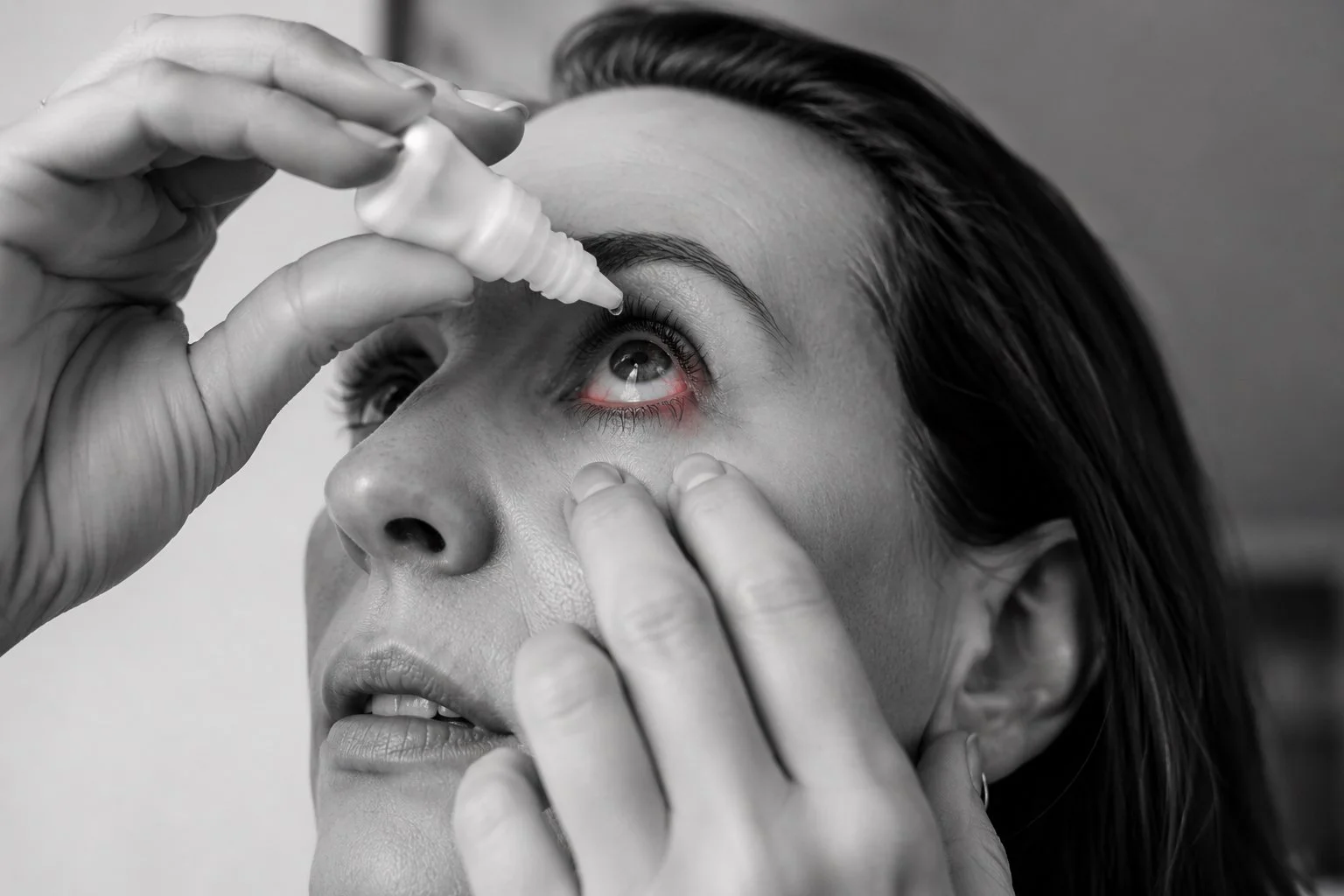
A patient came to see me after months of trying to make sense of what initially sounded like a collection of separate problems. Her eyes were persistently dry and uncomfortable. Her mouth was dry enough that she was carrying water everywhere and waking at night to drink. She also had fatigue, aching joints, and the nagging sense that something more systemic might be going on. Up to that point, the dryness had largely been approached as a local symptom and the joint pain as something separate. What she really needed was someone to join the dots.
That is often how Sjögren’s syndrome presents in real life. Not always dramatically, and not always all at once, but as a pattern that becomes harder to ignore over time. The NHS lists dry eyes, a dry mouth, aching muscles and joints, and marked tiredness among the common symptoms of Sjögren’s syndrome. Sjögren’s UK also describes a variable presentation, with common features including dry, irritated eyes, dry mouth, joint pain, muscle aches and fatigue.
What is Sjögren’s syndrome?
Sjögren’s syndrome is an autoimmune disease in which the immune system targets glands that produce moisture, particularly the tear glands and salivary glands. That is why dryness of the eyes and mouth is so characteristic. But it is not simply a “dryness condition”. The NHS notes that it can also cause joint and muscle pain, very tiredness, dry skin, vaginal dryness, rashes, cough, and swelling of the glands around the face and neck. Sjögren’s UK also highlights that symptoms may be systemic and not limited to the moisture-producing glands.
In some people, Sjögren’s occurs on its own. In others, it overlaps with another autoimmune rheumatic disease such as rheumatoid arthritis or lupus. EULAR’s recommendations reflect this broader, multisystem view and emphasise that management depends not only on dryness but also on pain, fatigue and any systemic involvement.
Sicca symptoms are the classic starting point
The classic symptoms of Sjögren’s syndrome are sicca symptoms — in other words, symptoms caused by reduced moisture production. In practice, that usually means dry eyes and a dry mouth. Patients may describe gritty, sore or irritated eyes, difficulty wearing contact lenses, blurred vision that comes and goes, waking at night to drink water, difficulty swallowing dry food, changes in taste, or increasing dental problems because of oral dryness. The NHS lists dry eyes and a dry mouth as the commonest symptoms, and Sjögren’s UK likewise describes these as typical early features.
Dryness on its own is common, and most people with sicca symptoms do not have Sjögren’s syndrome. The NHS dry-eyes and dry-mouth pages both make clear that these symptoms have many possible causes. But persistent sicca symptoms, especially when they affect both eyes and mouth and sit alongside fatigue or joint symptoms, should prompt a more thoughtful assessment.
What other connective tissue disease features might raise suspicion?
Sjögren’s is not only a dryness syndrome. It can also present as a connective tissue disease with wider systemic features. Symptoms that make the picture more suggestive include:
joint pain or stiffness
muscle aches
fatigue
Raynaud’s
rashes
salivary gland swelling
recurrent mouth ulcers
overlap with other autoimmune diseases such as lupus or rheumatoid arthritis
The NHS and Sjögren’s UK both describe fatigue and musculoskeletal symptoms as common, and EULAR’s recommendations reflect that Sjögren’s can have important systemic manifestations beyond sicca symptoms alone.
This is one reason Sjögren’s can be missed. A patient may present to an optician because of dry eyes, a dentist because of oral dryness, a GP because of fatigue, or a physiotherapist because of joint pain. If nobody steps back and looks at the whole picture, the diagnosis can be delayed.
Who tends to get it?
Sjögren’s syndrome can affect adults of different ages, but it is more common in women, often in mid-adulthood. Sjögren’s UK describes it as mainly affecting women, and its patient information materials note that it is usually diagnosed in adult life, often in middle age.
For a patient-facing blog, the important message is simple: it is common enough to consider when the pattern fits, but not so common that every dry eye or dry mouth complaint should automatically be treated as Sjögren’s.
What blood tests are used?
Patients often ask whether there is a single blood test that “shows” Sjögren’s. The answer is no. Blood tests can be helpful, but they are only one part of the assessment.
Depending on the situation, blood tests may include:
ANA
ENA antibodies, especially anti-Ro/SSA and anti-La/SSB
inflammatory markers
rheumatoid factor (RF)
and sometimes immunoglobulins such as IgG
Arthritis UK notes that antibodies such as anti-Ro and anti-La can support the diagnosis, while Sjögren’s UK’s diagnostic material also reflects the broader autoimmune pattern seen in practice. RF may be positive, and raised IgG / hypergammaglobulinaemia can occur as part of the immune activation seen in Sjögren’s syndrome. None of these tests is diagnostic on its own, but together they can strengthen or weaken suspicion when interpreted alongside symptoms and examination.
You can read more about blood tests in rheumatology:
ANA Positive: What It Means (and What It Doesn’t)
Blood Tests in Rheumatology: What Do CRP, ESR, ANA and Rheumatoid Factor Really Mean?
Is diagnosis based only on blood tests?
No — and that is one of the most important points.
The NHS says that if Sjögren’s syndrome is suspected, a GP may refer a patient to a specialist because many other conditions can cause similar symptoms. Sjögren’s UK likewise emphasises that diagnosis requires a combination of patient history, clinical assessment and specialist tests, often involving rheumatology together with ophthalmology or oral-medicine input.
In real practice, diagnosis may involve:
a detailed history
review of sicca symptoms
medication review
blood tests
and sometimes eye or salivary-gland assessments, depending on the picture
This matters because dryness is common, and overtesting everyone with mild symptoms is not sensible. Equally, repeatedly treating symptoms in isolation without considering an autoimmune cause can miss the bigger picture.
Could it be something else?
Yes, absolutely.
Dry eyes and dry mouth can be caused by:
common dry-eye disease
ageing
medications
diabetes
thyroid disease
dehydration
menopause-related change
anxiety-related mouth dryness
and other non-rheumatological problems
The NHS dry-eyes and dry-mouth pages both make clear that these symptoms have many causes and should be interpreted in context.
That is why the question is not “I have dry eyes, do I have Sjögren’s?” It is: does the overall pattern make Sjögren’s a reasonable possibility?
That is one of the main reasons rheumatology input can be useful. A specialist review is often less about ordering endless tests and more about deciding whether the story genuinely fits an autoimmune connective tissue disease.
Why joint pain matters in this picture
Joint pain is one of the things that often shifts the conversation from a local dryness problem to a more systemic one. The NHS specifically includes aching muscles and joints among common symptoms of Sjögren’s syndrome, and Sjögren’s UK likewise lists joint pain and muscle aches among typical features.
That does not mean every patient with dry eyes and aching joints has Sjögren’s, but it does mean the combination deserves more thought than simply treating the dryness alone.
How is Sjögren’s managed?
There is no single cure, but there are treatments and supportive measures that can help a great deal. The NHS says treatment depends on symptoms and may include lubricants for eyes and mouth, medicines to help stimulate tears or saliva, and treatments for pain, inflammation or wider systemic disease where needed. EULAR’s recommendations similarly emphasise tailoring treatment to the domains involved, particularly dryness, fatigue, pain and any systemic organ involvement.
For many patients, treatment is largely aimed at sicca symptoms and day-to-day symptom control. But that is not the whole story. When Sjögren’s causes more inflammatory or systemic features — for example joint inflammation, rash, renal involvement, neurological involvement, or other organ disease — rheumatologists may use DMARDs or other immunosuppressive treatments to target those specific aspects of the disease. EULAR’s recommendations and the recent BSR guideline approach both frame systemic treatment around the pattern and severity of organ involvement, rather than using one standard treatment for everyone.
That means Sjögren’s management often has two strands:
treatment of dryness and day-to-day symptoms
treatment of inflammatory or systemic disease activity when that is present
This is one reason a specialist rheumatology assessment can be useful: it helps distinguish between symptoms that need supportive treatment and features that may need a more targeted immunomodulatory approach.
You can read more about some of the disease modifying drugs (DMARDs) used in rheumatology below:
DMARDs Explained: Methotrexate, Sulfasalazine, Hydroxychloroquine, Mycophenolate and Leflunomide
How can a specialist assessment help?
For some patients, the most valuable thing is not a dramatic new diagnosis, but clarity.
A specialist review can help by:
deciding whether the sicca symptoms and joint pain really fit an autoimmune pattern
looking at symptoms in the context of blood tests and other features
distinguishing Sjögren’s from more common causes of dryness
deciding what needs further investigation
and making a practical plan for symptom control and longer-term follow-up
That is also where a private rheumatology assessment can be particularly useful for some people: more time to go through the pattern properly, interpret blood tests in context, and decide whether the picture really does point toward connective tissue disease or whether something else is more likely.
The bottom line
Dry eyes and dry mouth are common symptoms, and most cases are not Sjögren’s syndrome. But when sicca symptoms sit alongside joint pain, fatigue, salivary-gland symptoms, Raynaud’s, rashes, abnormal autoimmune blood tests, or other connective-tissue-disease features, the pattern becomes more suggestive. The NHS and Sjögren’s UK both describe dry eyes, dry mouth, joint pain and fatigue as characteristic features of the disease.
So the important question is not simply “are my eyes dry?” It is: does the overall story fit a wider autoimmune pattern?
When the answer may be yes, that is exactly the sort of situation where rheumatology can be useful.
Related Reading:
Could It Be Lupus? Symptoms, Blood Tests and When to Seek Specialist Advice
Fatigue in Rheumatic Disease: Why It Happens and What Actually Helps
Please note, these posts are for general information only and do not constitute medical advice. Dr Singh would encourage you to speak to your healthcare professional to be assessed and managed for your specific symptoms.