
Raynaud’s and Chilblains: Understanding the Causes — and When to Look Deeper
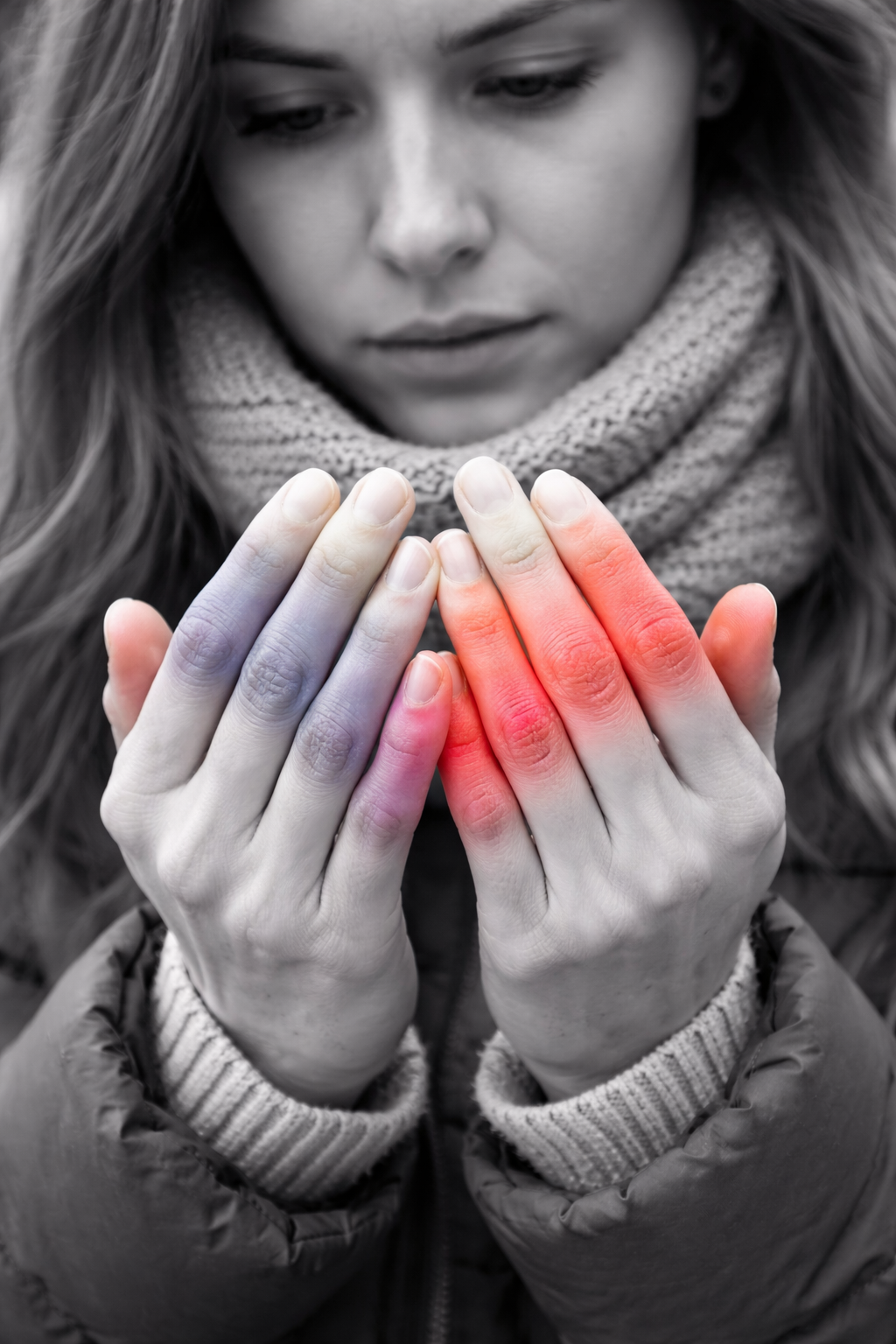
Cold, painful fingers or toes are common in winter, but for some people these symptoms are more than simple cold sensitivity. Raynaud’s phenomenon and chilblains are two conditions frequently encountered in rheumatology practice. While they can overlap, they have different mechanisms, implications and management strategies. Understanding the difference — and knowing when further assessment is needed — is key.
What Is Raynaud’s Phenomenon?
Raynaud’s phenomenon occurs when small blood vessels in the fingers or toes constrict excessively in response to cold or emotional stress. This leads to characteristic colour changes:
White – reduced blood flow
Blue – prolonged lack of oxygen
Red – blood returning to the tissues
Symptoms may include numbness, tingling, throbbing or pain and usually improve with rewarming.
Primary vs Secondary Raynaud’s
Distinguishing between primary and secondary Raynaud’s is one of the most important aspects of assessment.
Primary Raynaud’s
Very common
Often begins in adolescence or early adulthood
No underlying disease
Normal blood tests
Usually symmetrical and relatively mild
No tissue damage
Primary Raynaud’s is uncomfortable but not dangerous, and many patients manage well with lifestyle measures alone.
Secondary Raynaud’s: When There Is an Underlying Cause
Secondary Raynaud’s occurs as part of another condition and is clinically more significant. It may be associated with:
Connective tissue and autoimmune diseases
Systemic sclerosis (scleroderma)
Lupus
Sjögren’s syndrome
Inflammatory myositis
Mixed connective tissue disease
Vascular and blood-related causes
Vasculitis
Cryoglobulinaemia
Antiphospholipid syndrome
Mechanical or occupational factors
Repeated vibration exposure
Thoracic outlet syndrome
Medications
Beta blockers
Certain migraine therapies
Chemotherapy agents
Smoking
A major contributor due to powerful vasoconstriction
Red flags suggesting secondary Raynaud’s include later onset, severe pain, asymmetry, ulcers, slow healing, or associated symptoms such as joint pain, rashes, fatigue or breathlessness.
What Are Chilblains?
Chilblains (also known as pernio) are inflammatory skin lesions that develop after exposure to cold and damp conditions. They typically appear as:
Red or purple patches
Swollen, tender or itchy areas
Commonly affecting toes, fingers, ears or the nose
Unlike Raynaud’s, chilblains are caused by inflammation and leakage of small blood vessels, rather than transient spasm alone. Lesions may take days to weeks to settle.
Chilblains can occur in isolation or alongside Raynaud’s and are more common in people with poor circulation, low body weight, prolonged cold exposure, or underlying autoimmune disease.
Chilblains and “COVID Toes”
During the COVID-19 pandemic, a form of chilblain-like lesions became widely recognised, often referred to as “COVID toes.” These lesions typically present as red or purple, swollen, sometimes painful patches on the toes (and occasionally fingers), and may resemble classical chilblains.
Key features include:
Occurring during or shortly after COVID-19 infection
Often seen in younger patients and children
May appear even in the absence of cold exposure
Usually self-limiting
The exact mechanism is not fully understood but is thought to involve immune-mediated inflammation of small blood vessels, rather than direct viral damage. Importantly, COVID-related chilblain-like lesions generally resolve on their own and do not usually indicate long-term vascular disease.
However, persistent, recurrent or atypical chilblains — particularly outside winter months — still warrant assessment to exclude underlying autoimmune or inflammatory conditions.
Assessment: Looking Beyond the Skin
When assessing Raynaud’s or chilblains, I take a whole-person, systematic approach, including:
Age of onset and symptom pattern
Severity and triggers
Examination of skin, nails and joints
Nailfold capillaroscopy where appropriate
Autoimmune blood tests
Inflammatory markers
Review of medications and lifestyle factors
This approach helps distinguish benign conditions from those requiring closer monitoring or treatment.
Management: What Helps?
Lifestyle measures
Keeping the whole body warm
Layered clothing
Gloves even in mild cold
Avoiding rapid temperature changes
Smoking cessation
These measures are essential and often highly effective.
Medications
For more severe symptoms or secondary causes:
Vasodilator therapies
Treatment of underlying autoimmune disease
Targeted therapy for ulcers or complications
Supplements in Primary Raynaud’s
In selected patients with primary Raynaud’s, supplements may provide modest benefit as part of a broader strategy. These are not a replacement for medical treatment, but may help some individuals.
Commonly discussed options include:
Omega-3 fatty acids
Magnesium
L-arginine
Use should be individualised and reviewed to avoid interactions or false expectations.
Why Specialist Assessment Matters
Raynaud’s and chilblains sit at the intersection of vascular, inflammatory and autoimmune medicine. While many cases are benign, some represent early signs of systemic autoimmune disease.
Patients often value:
Clear explanations
Reassurance without dismissal
Understanding what to monitor
A structured plan
Early assessment provides clarity, confidence and — where needed — timely intervention.
In Summary
Raynaud’s and chilblains are common, particularly in colder months
Primary Raynaud’s is usually benign
Secondary Raynaud’s requires careful evaluation
Chilblains may occur after COVID-19 infection
Supplements may help selected patients with primary Raynaud’s
A whole-person approach ensures appropriate reassurance and investigation
Please note, these posts are for general information only and do not constitute medical advice. Dr Singh would encourage you to speak to your healthcare professional to be assessed and managed for your specific symptoms.