
Gout: More Than Just a Diet Problem
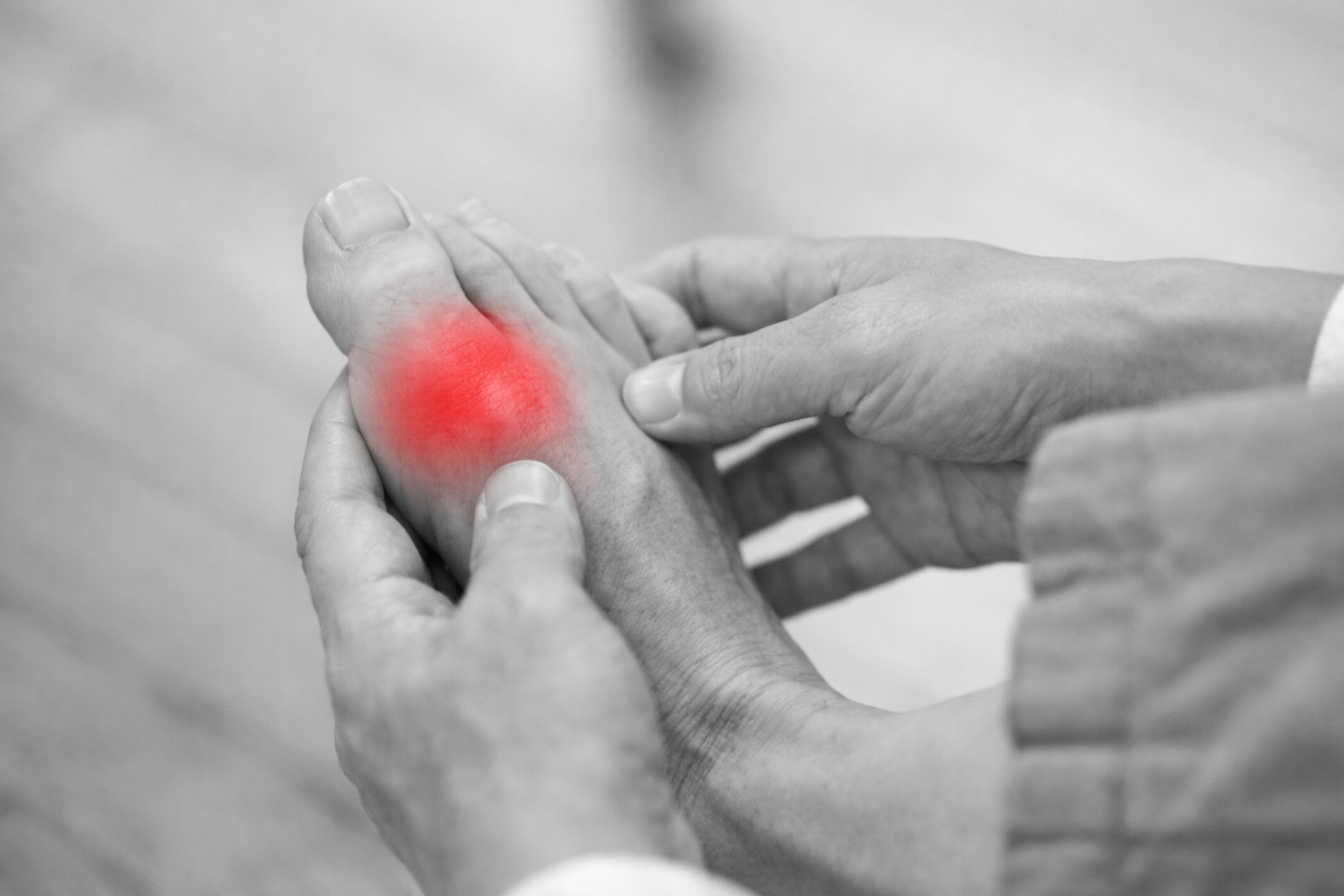
Gout is often portrayed as an old-fashioned condition caused by rich food, alcohol or personal excess. This stereotype is inaccurate and can leave patients feeling blamed for a disease that is strongly influenced by genetics, kidney function, medication and other medical conditions.
Diet and alcohol can affect gout, but they are rarely the whole explanation.
Gout is an inflammatory arthritis caused by microscopic crystals of monosodium urate forming in and around joints. These crystals develop when the level of urate—often called uric acid—in the blood remains high enough for long enough.
A gout attack can be extraordinarily painful. Fortunately, gout is also one of the most treatable forms of inflammatory arthritis. Acute inflammation can usually be controlled, and an effective long-term strategy can allow existing crystals to dissolve and prevent future attacks.
The difficulty is that gout is often treated as a series of isolated painful episodes rather than as a long-term crystal-deposition disease.
What does a gout attack feel like?
A gout flare often begins suddenly, sometimes overnight. The affected joint becomes intensely painful, swollen, hot and tender. Even light contact from a sock, shoe or bedsheet may feel unbearable.
The joint at the base of the big toe is a classic site, but gout can also affect the ankles, knees, feet, wrists, fingers and elbows. More than one joint may become inflamed, particularly when gout has been present for some time.
Symptoms often become severe within hours. The skin may appear red or darker than usual, although colour change can be less obvious on darker skin. The joint may be so painful that walking or ordinary movement becomes difficult.
Between attacks, the joint may return completely to normal. This does not mean that the gout has disappeared. Urate crystals can remain in the joint even when there is no pain.
A hot swollen joint is not always gout
Gout is an important cause of sudden joint inflammation, but it is not the only one.
An infection inside a joint—septic arthritis—can produce similar pain, heat and swelling. This requires urgent treatment. Calcium pyrophosphate crystal arthritis, previously called pseudogout, can also closely resemble gout. Injury, inflammatory arthritis and bleeding into a joint are other possibilities.
Urgent medical assessment is particularly important when a hot swollen joint is accompanied by fever, shaking, feeling systemically unwell, recent surgery, a joint replacement, broken skin or significant immunosuppression.
A previous diagnosis of gout should not automatically be used to explain every future episode. Infection and gout can occasionally occur together.
What causes gout?
Urate is produced when the body breaks down substances called purines. Purines occur naturally in the body and are also found in some food and drink.
The kidneys remove much of the body’s excess urate. In many people with gout, the main problem is not excessive dietary intake but an inherited tendency for the kidneys to clear urate less efficiently.
Several factors can contribute. These include genetics, chronic kidney disease, excess body weight, high blood pressure, diabetes, metabolic disease and certain medicines—particularly some diuretics used to treat blood pressure or fluid retention.
Age and biological sex also influence risk. Gout is more common in men and becomes more common with age. In women, it is seen more often after menopause.
Not everyone with a raised urate level develops gout. The blood result shows the biochemical environment in which crystals may form, but the diagnosis depends on the clinical picture and, where necessary, further investigation.
Is gout caused by diet?
No single diet explains gout, and there is not enough evidence that a particular “gout diet” can reliably prevent attacks or lower urate sufficiently on its own.
Excess alcohol can provoke attacks in some people, particularly beer and spirits. Sugar-sweetened drinks, excess body weight and very high consumption of certain purine-rich foods may also contribute. A healthy, balanced diet and gradual weight reduction where appropriate can support gout management and improve wider cardiovascular and metabolic health.
However, restrictive diets often produce only a modest reduction in urate. They can also create unnecessary guilt and distract from treatment that is more likely to prevent joint damage and recurrent attacks.
Someone with frequent gout, tophi or a substantial crystal burden will usually require a medical urate-lowering strategy rather than dietary advice alone.
How is gout diagnosed?
The pattern of the attack is important: how quickly it developed, which joint was affected, whether similar episodes have occurred and whether the joint returned to normal between attacks.
Examination may identify active inflammation, previous joint damage or tophi. Tophi are firm collections of urate crystals that can develop beneath the skin, commonly around the fingers, toes, elbows, heels or ears.
A serum urate blood test is useful, but it must be interpreted carefully. The urate level can temporarily fall during an acute attack. A normal result taken during a flare therefore does not necessarily exclude gout.
If gout remains strongly suspected despite a urate level below 360 micromol/L during the attack, the test should usually be repeated after the flare has settled.
Joint aspiration and crystal analysis
When the diagnosis remains uncertain, fluid can be removed from the swollen joint using a needle. This is known as joint aspiration.
The fluid can be examined under a microscope for monosodium urate crystals. It can also be tested for infection. This is particularly valuable when the presentation is unusual, the first attack is severe, the response to treatment is unexpected or septic arthritis is a concern.
Joint aspiration is not required for every patient with a typical presentation, but it can prevent an incorrect diagnosis when the clinical picture is unclear.
Can imaging diagnose gout?
Imaging can help in selected cases, but it should support clinical assessment rather than replace it.
Ultrasound may identify crystal deposition, tophi or a characteristic appearance called the double-contour sign. Dual-energy CT, or DECT, can identify and map urate deposits more directly.
These investigations are most useful in atypical, recurrent, multi-joint or long-standing disease, particularly when joint aspiration is not possible or has not resolved the uncertainty.
An ordinary X-ray may be normal in early gout. In established disease, it may show characteristic joint damage, but waiting for X-ray changes would mean waiting too long.
How is an acute gout attack treated?
The immediate aim is to suppress inflammation and relieve pain.
The usual first-line options are a non-steroidal anti-inflammatory drug, colchicine or a short course of an oral corticosteroid. A steroid injection into the affected joint may sometimes be considered once infection has been excluded.
No single treatment is safest or best for everyone. The choice depends on kidney and liver function, stomach and cardiovascular history, diabetes, current medication, previous response and the possibility of drug interactions.
Treatment is generally most effective when started early.
Colchicine is not an ordinary painkiller. It interrupts the inflammatory response to urate crystals but does not lower the urate level or remove the underlying crystal burden. Its dose must be respected because excessive colchicine can cause serious toxicity.
You can read more in Colchicine for Gout: Uses, Side Effects and Safety.
People already taking allopurinol or febuxostat should not usually stop it during an acute attack. Stopping and restarting urate-lowering treatment can destabilise urate levels and make long-term control more difficult.
Why flare treatment is not enough
Treating a gout attack controls the inflammation caused by crystals, but it does not remove those crystals.
If urate remains above the saturation point, further deposits can accumulate between attacks. Over time, flares may become more frequent, involve more joints or fail to settle fully between episodes.
Persistent crystal deposition can cause tophi, chronic joint inflammation, tendon problems and permanent damage to cartilage and bone.
This is why recurrent gout requires a prevention strategy rather than an indefinite supply of medicines for the next attack.
Who should consider urate-lowering treatment?
Long-term urate-lowering treatment should be offered when gout causes multiple or troublesome flares, tophi or chronic gouty arthritis. It should also be offered in important higher-risk situations, including chronic kidney disease stages 3 to 5 and ongoing diuretic treatment.
It is also reasonable to discuss treatment after a first attack, even when these additional factors are not present. The decision should take account of the urate level, age, comorbidities, family history, severity of the attack and the patient’s preferences.
Once established and effective, urate-lowering treatment is usually continued long term. It should not be regarded as a short course that can automatically be stopped when the blood result first reaches target.
Allopurinol and febuxostat
Allopurinol and febuxostat reduce the production of urate. They are preventive treatments rather than medicines for immediate pain relief.
Treatment should begin at an appropriate dose and then be adjusted according to repeat serum urate measurements. Simply prescribing a standard starting dose and leaving it unchanged may not lower urate sufficiently.
NICE recommends that either allopurinol or febuxostat can be considered when beginning a treat-to-target strategy, taking account of comorbidities and patient preference. Allopurinol should be offered first when someone has major cardiovascular disease, such as a previous heart attack or stroke or unstable angina. Febuxostat requires additional caution in this group.
The choice is therefore not simply a question of which drug is “stronger.” It depends on the wider clinical situation, previous treatment, kidney function, cardiovascular history, tolerability and response.
This is discussed in detail in Allopurinol and Febuxostat for Gout: When They Are Used and What Patients Should Know.
Treating to a target urate level
The aim is not merely to improve the blood result. It is to keep the urate low enough for existing crystals to dissolve and prevent new crystals from forming.
The usual target is a serum urate below 360 micromol/L. A lower target below 300 micromol/L may be considered when there are tophi, chronic gouty arthritis or continuing frequent attacks despite reaching the standard target.
Urate is usually checked regularly while treatment is being adjusted. Once the target has been reached and treatment is stable, ongoing monitoring remains important. NICE advises considering annual serum urate monitoring during established urate-lowering treatment.
The dose required to reach target varies considerably. An inadequate response to a low starting dose does not necessarily mean the medicine has failed.
Why can gout initially worsen after starting treatment?
Starting or increasing urate-lowering treatment can temporarily provoke attacks. This can be confusing and may lead patients to conclude that allopurinol or febuxostat is making the disease worse.
As the urate level falls, existing crystal deposits begin to change and dissolve. During this transition, crystals can temporarily become more likely to trigger inflammation.
Preventive treatment is therefore often offered while urate-lowering therapy is started and adjusted. Colchicine is commonly used for this purpose. When colchicine is unsuitable, a carefully selected alternative may be considered.
An early flare does not necessarily mean that the long-term treatment is wrong. Stopping the urate-lowering medicine without advice may prolong the period of instability.
How long does improvement take?
The blood urate level may reach target before the crystal burden has fully dissolved.
Attacks can therefore continue for several months after treatment begins, even when the urate result is improving. Larger deposits and tophi may take much longer to resolve.
This delay is one reason patients can lose confidence in otherwise effective treatment. Long-term success depends on reaching the target, remaining on treatment and allowing sufficient time for existing crystals to clear.
What are tophi?
Tophi are visible or palpable collections of urate crystals beneath the skin or within joints and tendons. They may occur around the fingers, toes, elbows, heels and ears.
They are evidence of a substantial and usually long-standing crystal burden. Tophi can restrict movement, damage joints, irritate tendons or occasionally break through the skin.
Tophi can shrink when urate is maintained below target, but this usually happens gradually. More severe tophaceous disease may require a lower urate target and specialist treatment planning.
Gout, kidney disease and cardiovascular health
Gout frequently occurs alongside chronic kidney disease, high blood pressure, diabetes, excess weight and cardiovascular disease. These conditions may contribute to raised urate, affect the choice of flare treatment and influence which urate-lowering medicine is most suitable.
The association between gout and cardiovascular disease should be taken seriously, but it should not be overstated. Gout does not inevitably cause a heart attack or stroke, and lowering urate has not been proven to remove cardiovascular risk directly.
The practical message is that recurrent gout should prompt attention to blood pressure, cholesterol, diabetes risk, smoking, weight, kidney function and the wider medication list rather than being treated as an isolated joint problem.
You can read more in Gout and Cardiovascular Risk: Why Recurrent Gout Should Be Taken Seriously.
When might specialist assessment help?
Much gout can be diagnosed and treated successfully in primary care. Specialist assessment becomes particularly useful when the diagnosis is uncertain, treatment is contraindicated or poorly tolerated, attacks continue despite treatment, or the urate level remains above target.
Rheumatology input may also help when several joints are involved, tophi or joint damage are suspected, kidney disease complicates prescribing, gout begins unusually early or joint aspiration or specialist imaging is being considered.
The purpose is not simply to prescribe another medicine. It is to confirm that gout is genuinely the diagnosis, assess the crystal burden and wider medical context, and create a plan that prevents further attacks.
If gout attacks are recurring, the diagnosis remains uncertain, or the urate level remains above target despite treatment, a specialist review may help clarify the diagnosis and develop a long-term prevention plan. Information about private rheumatology appointments is available here.
The bottom line
Gout is not simply a consequence of diet or lifestyle. It is a crystal-deposition disease influenced by genetics, kidney handling of urate, medication and associated medical conditions.
An acute attack needs prompt anti-inflammatory treatment, but repeated flare treatment alone does not address the underlying problem.
The long-term aim is to confirm the diagnosis, lower serum urate to an appropriate target and keep it there consistently. This allows crystals to dissolve, prevents attacks and protects joints from further damage.
With a structured treat-to-target strategy, most gout can be controlled extremely well.
Related reading
Colchicine for Gout: Uses, Side Effects and Safety
Allopurinol and Febuxostat for Gout: When They Are Used and What Patients Should Know
Gout and Cardiovascular Risk: Why Recurrent Gout Should Be Taken Seriously
Trusted patient information
Please note, these posts are for general information only and do not constitute medical advice. Dr Singh would encourage you to speak to your healthcare professional to be assessed and managed for your specific symptoms.