
Steroid Injections for Joint and Soft Tissue Pain: When They Help — and When They Are Not the Whole Answer
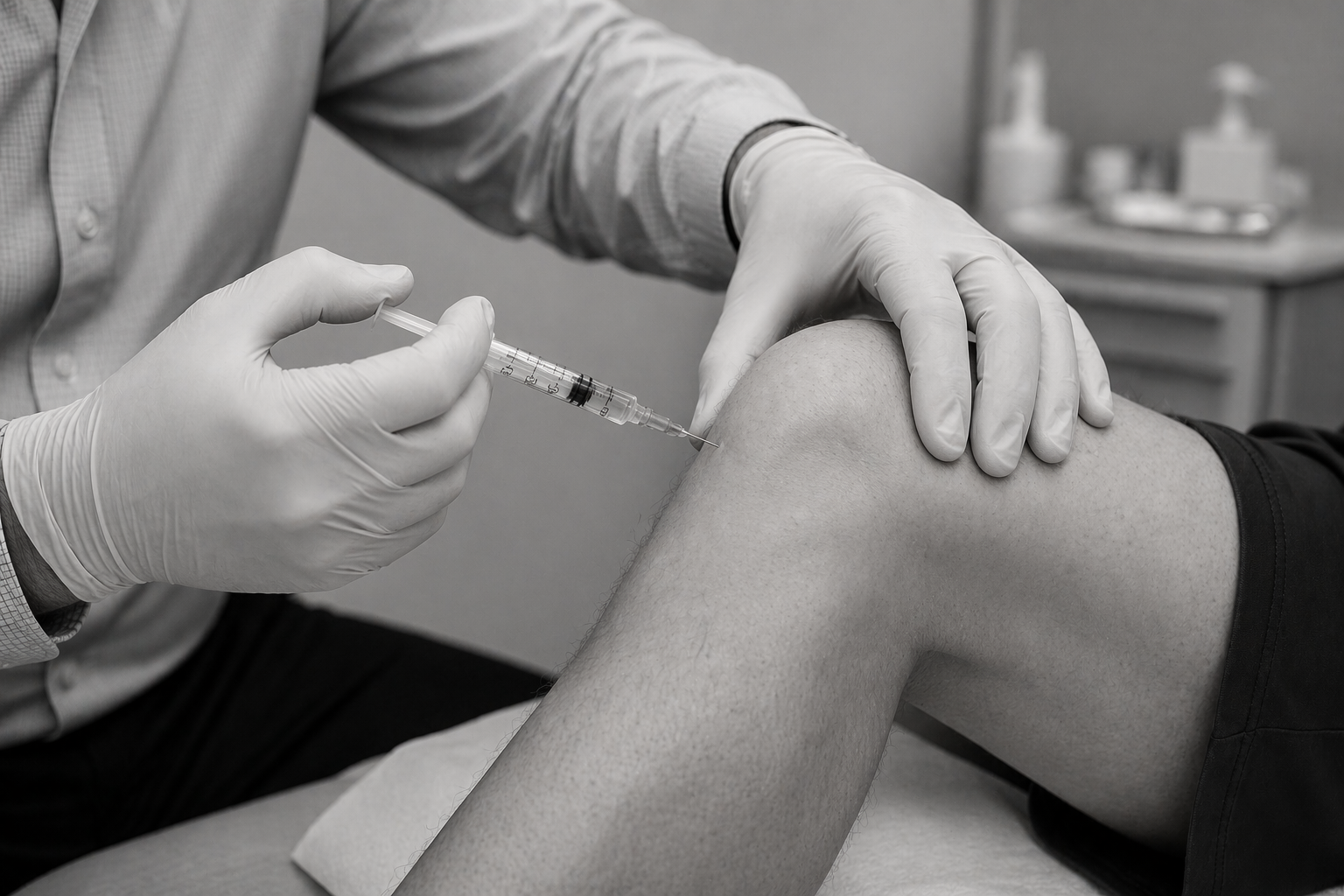
Steroid injections are one of the commonest treatments patients ask about in rheumatology and musculoskeletal practice. They are also one of the most misunderstood. Some people see them as a quick fix. Others are wary of them altogether. In reality, steroid injections can be very useful in the right setting, but they work best when they are used for the right problem, in the right place, and as part of a broader plan rather than as a stand-alone answer. NICE recommends considering intra-articular corticosteroid injections in osteoarthritis when other drug treatments are ineffective or unsuitable, and also notes they may be used to support therapeutic exercise.
The first thing to say is that steroid injections are not one single thing. They may be used into a joint, around a tendon sheath, into a bursa, or around other soft tissues depending on the diagnosis. They are used because corticosteroids reduce inflammation locally, which can reduce pain, swelling and stiffness. NHS and patient information sources commonly describe them being used for joint and soft-tissue pain, including tendon and bursal problems.
That means they can be helpful in selected cases of inflammatory arthritis, osteoarthritis, bursitis, capsulitis and some tendon-related problems. This ties closely to What Do We Mean by “Inflammation”? Why Rheumatologists and Patients Often Mean Different Things.
What steroid injections can do well
A well-targeted steroid injection can sometimes settle a particularly inflamed joint or soft tissue problem quite quickly. In practice, that may mean helping someone sleep again, move more normally, get through a flare, or engage with physiotherapy and rehabilitation that pain had been blocking. NICE’s osteoarthritis guidance and NHS physiotherapy leaflets both support this practical role: short-term symptom reduction that can help someone progress exercise and rehabilitation.
This is where they are often most valuable: not as magic, but as a window of opportunity. If a painful shoulder can move again, that may allow rehabilitation. If a swollen knee settles, that may help someone return to walking or work. If one persistently inflamed joint improves, it may make the rest of a treatment plan more achievable. That is often a very worthwhile gain, even if the injection itself is not a permanent solution.
What they do not do
Steroid injections do not cure the underlying condition. They treat symptoms by reducing inflammation locally, rather than correcting the root cause of the disease. That distinction matters. If someone has rheumatoid arthritis, psoriatic arthritis, recurrent gout or another inflammatory disease, a steroid injection may help a painful area, but it does not replace getting the overall diagnosis and long-term treatment right. EULAR’s recommendations on intra-articular therapies focus on practical use of injections within overall management, not as a cure in themselves.
That is just as important in non-inflammatory problems. In osteoarthritis, injections may reduce pain for a period of time, but they do not reverse cartilage loss or “fix” the joint. In tendon and soft tissue pain, an injection may calm local inflammation or irritation, but it does not automatically address overload, biomechanics, weakness, deconditioning, or the other factors that may have led to the problem in the first place.
Relief is often temporary
This is probably the most important expectation to set properly. Patients are sometimes led to believe that an injection should solve the problem for months on end. Sometimes it does help for quite a while, but often the benefit is short term. NICE CKS says intra-articular corticosteroid injections for osteoarthritis typically provide short-term relief for up to 12 weeks. NHS patient leaflets also commonly describe benefit lasting for a few months, and note that some patients get little or no benefit.
That does not make the injection a failure. Short-term relief can still be useful. But it does mean the real question is often not simply “shall I have an injection?” but “what are we trying to achieve with it?” If the answer is to settle an acute inflammatory problem, buy time, restore movement, or enable rehabilitation, that can be a sensible use of it. If the hope is that it will permanently solve a chronic underlying problem, expectations may need adjusting.
Which conditions are most likely to benefit?
The answer depends on the diagnosis.
In inflammatory arthritis, a steroid injection can be useful for a persistently active joint, a tendon sheath, or a local flare while the wider treatment plan is being established or adjusted. In osteoarthritis, injections can sometimes be helpful for short-term pain relief, especially when pain is blocking exercise or function. In bursitis, capsulitis, trigger finger, plantar fascia and some tendon-related problems, they can also be considered in selected cases. These uses are reflected across NHS patient information and EULAR guidance on intra-articular therapy and interventional procedures.
In gout, an injection into an acutely inflamed joint can be helpful in selected cases, but the bigger issue is usually whether the diagnosis is secure and whether long-term urate lowering is needed. Even when the injection is appropriate, it should sit inside the broader management plan rather than become the whole strategy. That last point is a clinical inference from the broader role of injections as local symptom control rather than definitive disease management.
Read more about different types of inflammatory arthritis: rheumatoid arthritis explained, psoriatic arthritis explained.
Read more about osteoarthritis.
Read more about gout.
Ultrasound-guided versus anatomically guided injections
Patients often ask whether an injection should be performed under ultrasound guidance or whether it can be done using anatomical landmarks alone. The answer depends on the problem being treated, the joint or soft tissue being targeted, and the experience of the clinician performing it.
Ultrasound guidance can improve accuracy and is particularly useful when the target is small, deep, close to important structures, or difficult to access confidently by examination alone. It can also help when the diagnosis itself still needs clarifying at the same time — for example, when confirming whether there is an effusion, synovitis, bursitis or tenosynovitis before proceeding. EULAR’s 2022 points to consider state that ultrasound should be the first imaging modality for interventional procedures at peripheral joints.
That said, not every injection needs ultrasound. EULAR’s 2021 recommendations on intra-articular therapies say imaging guidance may be used, particularly for joints that are difficult to access, which implies that straightforward landmark-guided injections remain reasonable in many settings. In day-to-day practice, the added value of ultrasound depends on what is being injected and why.
In practical terms, ultrasound guidance is most useful when precision is especially important, when previous injections have failed, when anatomy is less straightforward, or when there is still uncertainty about what exactly is driving the pain. In simpler cases, an anatomically guided injection may still be entirely appropriate. The key is to use the method that best fits the diagnosis, target and clinical question. This final point is a clinical inference from the EULAR recommendations.
How is a steroid injection performed?
A steroid injection is usually a straightforward outpatient procedure. The skin is cleaned, the area is identified, and the injection is placed either into the joint or into the relevant soft tissue, depending on the diagnosis. Sometimes the steroid is mixed with a local anaesthetic. Joint or soft tissue injections are given by a trained healthcare professional, with benefits, risks, consent and safety checks discussed beforehand.
If the injection is being done in an anatomically guided way, the clinician uses examination and surface landmarks to identify the right entry point. If it is being done under ultrasound guidance, the scan is used to confirm the target and guide needle placement more precisely. The choice depends on what is being injected, how straightforward the anatomy is, and whether imaging is likely to add useful accuracy.
Rest and recovery after a steroid injection
After the injection, the usual advice is to rest the treated area and avoid heavy use or strenuous activity for 24 to 48 hours.
That does not always mean complete immobility, but it does mean giving the area a chance to settle rather than testing it too hard too soon. In some cases, gentle movement or later physiotherapy may still be part of the plan.
Patients should also know that the area can be more painful for the first day or two after the injection and this can be tackled through simple painkillers.
The steroid itself does not always work immediately. Patients usually start noticing benefit after 48 to 72 hours but it may not work fully for 7 to 10 days.
Driving, return to work and return to sport depend on the site injected, how sore the area is afterwards, and whether local anaesthetic has been used.
When I would be more cautious with steroid injections
Steroid injections are not automatically the right answer just because something hurts. Pain is not always driven by inflammation. A problem that is mainly mechanical, degenerative, overload-related, or part of a broader chronic pain picture may not respond especially well, and repeated injections in that setting can create the illusion of “doing something” while the real problem remains insufficiently addressed. NICE’s rationale for osteoarthritis explicitly frames corticosteroid injections as short-term symptom relief rather than a long-term answer.
That is why diagnosis matters so much. Before thinking about an injection, it helps to be clear what structure is painful, whether inflammation is actually present, whether the symptoms fit the suspected diagnosis, and what the injection is meant to achieve. In some patients, the better next step is physiotherapy, load modification, aspiration, imaging, or getting the diagnosis straight rather than moving directly to injection. This is a clinical inference, but it follows from NICE and EULAR both placing injections within a broader treatment strategy.
How quickly do they work?
Patients often ask this, and the answer varies. NHS patient leaflets commonly say the steroid usually starts to work after a couple of days, though sometimes it takes longer. If a local anaesthetic is used as part of the injection, there may be earlier temporary relief from that alone before the steroid effect properly begins.
That point matters because people sometimes judge an injection too early. Immediate numbness or early relief may relate to the anaesthetic, while the steroid itself often takes a bit longer to declare itself. Equally, not everyone responds, and one of the practical realities of injection therapy is that benefit can vary quite a lot from one person to another.
Are there downsides?
There can be. Short-term worsening of pain for a day or two, lack of benefit, local skin changes, infection risk, and systemic steroid effects are all part of the conversation, although serious complications are uncommon when injections are used appropriately. NHS patient leaflets also make the broader point that repeat use needs thought, and some advise limiting frequency in the same joint or area.
This is another reason injections are best seen as part of a strategy rather than as a reflex. If a patient keeps needing the same injection repeatedly, it is often worth asking whether the diagnosis is right, whether something else needs to change, or whether the injection is simply papering over an unresolved problem. That is a clinical inference, but it is consistent with the guidance’s emphasis on proportionate use and short-term symptom control.
The more useful question
In clinic, I think the most helpful question is usually not “should I have a steroid injection?” but: what is driving the pain, and what role would an injection play in the overall plan?
Sometimes the answer is that an injection is exactly the right next step. Sometimes it is that the injection may help, but only temporarily, and should be used to support rehabilitation or bridge a flare. Sometimes it is that the real priority is getting the diagnosis clearer, starting the right long-term treatment, or addressing mechanics rather than inflammation.
The bottom line
Steroid injections can be very helpful for selected joint and soft tissue problems. They can reduce inflammation, ease pain and stiffness, and sometimes create the window needed for movement, rehabilitation or symptom control. But they are not a cure, they are often temporary, and they work best when they are used for the right diagnosis and as part of a wider plan.
Please note, these posts are for general information only and do not constitute medical advice. Dr Singh would encourage you to speak to your healthcare professional to be assessed and managed for your specific symptoms.