
Bisphosphonates for Osteoporosis: Benefits, Side Effects and How Long to Take Them
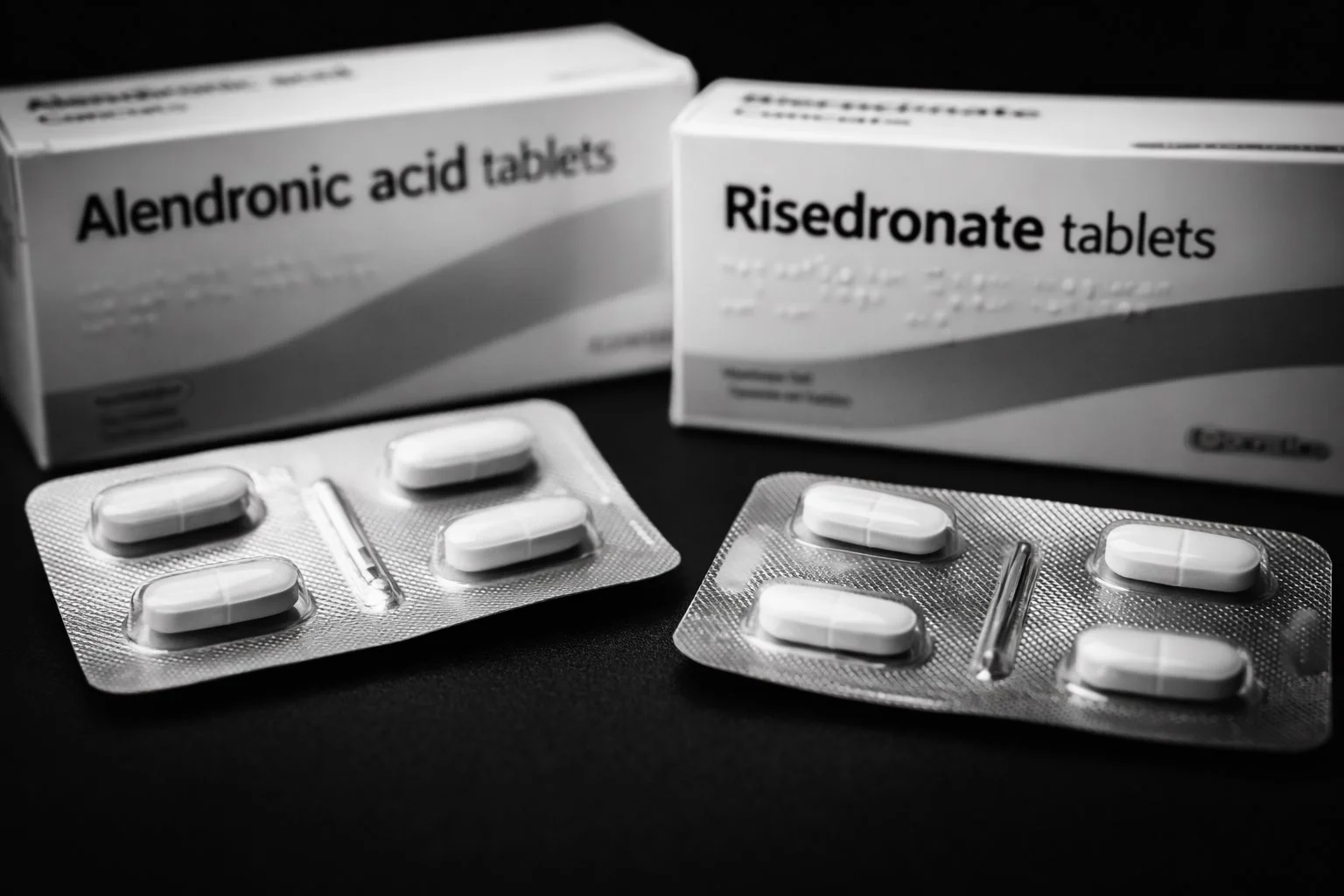
Bisphosphonates are the most commonly used first-line medicines for osteoporosis in the UK. They have a strong evidence base, are generally well tolerated, and—most importantly—reduce the risk of future fractures in people at increased risk.
Patients often arrive with two understandable concerns:
“Do I really need this medication?”
“I’ve read about rare side effects—how worried should I be?”
This blog explains what bisphosphonates do, who they’re for, how to take them safely, what side effects to watch for, and how long treatment is usually continued.
What are bisphosphonates—and how do they work?
Bone is living tissue. Even in healthy adults, bone is constantly being broken down and rebuilt. Osteoporosis occurs when breakdown outpaces rebuilding, leading to lower bone strength and a higher risk of fractures—particularly in the spine, hip and wrist.
Bisphosphonates work by reducing bone breakdown (they dampen the activity of bone-resorbing cells). Over time, this helps bone strength stabilise or improve, and reduces fracture risk.
A quick expectation check: bisphosphonates don’t relieve day-to-day aches and pains
Bisphosphonates are prescribed to reduce future fracture risk by improving bone strength over time. They do not work like painkillers, and people won’t “feel” a direct benefit day to day.
They also do not treat osteoarthritis aches and stiffness, because osteoarthritis pain comes from changes in cartilage, bone surfaces and surrounding soft tissues—not from low bone density itself. It’s therefore normal to continue to have background joint symptoms even when osteoporosis treatment is working as intended.
Read more about osteoarthritis: Osteoarthritis: More Than “Wear and Tear” — Understanding the Modern Science
Who has the strongest evidence base?
The largest and longest clinical trials of bisphosphonates were carried out in post-menopausal women, because this is the most common group affected by osteoporosis. However, bisphosphonates are also used (with good supporting evidence and guideline backing) in men with osteoporosis and in people with glucocorticoid-induced osteoporosis (for example, those taking long-term prednisolone). The key point is that treatment decisions are based on fracture risk, not sex alone—often guided by DEXA results, fracture history, and overall clinical risk factors.
Read more about osteoporosis: Understanding Bone Health and Osteoporosis
Read more about steroids in rheumatology: Steroids Explained
Read more about DEXA scans and assessing bone health: What Is a DEXA Scan — and How Is It Used in Assessing Bone Health?
Who are bisphosphonates recommended for?
Bisphosphonates are typically used when a person has:
osteoporosis confirmed on a DEXA scan, and/or
a high FRAX fracture risk, and/or
a fragility fracture (e.g., spine, hip, wrist fracture after a low-impact fall), and/or
osteoporosis risk driven by steroid treatment (for example, long-term prednisolone).
Which bisphosphonates are used for osteoporosis?
Common options include:
Oral tablets
Alendronic acid (often weekly)
Risedronate (often weekly)
Ibandronate (monthly in some regimens)
Intravenous (IV) infusion
Zoledronic acid (often once yearly)
In practice, the choice depends on fracture risk profile, stomach tolerance, kidney function, convenience, and patient preference.
How to take oral bisphosphonates properly
Most side effects people experience with tablets are due to irritation of the oesophagus/stomach. Technique reduces this risk.
A common set of instructions (your clinician may tailor these) is:
take the tablet first thing in the morning
swallow with a full glass of plain water
do not lie down for 30 minutes afterwards
avoid food, coffee, supplements and other medications for at least 30 minutes (sometimes longer depending on brand)
If someone has significant reflux/oesophageal issues or can’t manage the dosing routine, an IV option may be more suitable.
What about calcium and vitamin D?
Bisphosphonates work best when the body has:
adequate vitamin D
sufficient calcium intake (dietary preferred or supplements if needed)
Many patients will have vitamin D checked and replaced if low. Supplement advice is individual—some people can achieve calcium intake through diet alone.
Side effects: what’s common vs what’s rare?
Common or expected (usually manageable)
Oral bisphosphonates
heartburn / indigestion
throat irritation (especially if not taken as directed)
Zoledronic acid infusion
“flu-like” symptoms (aches, feverish feeling) for 24–72 hours after the first infusion is relatively common
these typically respond to simple measures such as hydration and paracetamol (if appropriate)
Less common but important to be aware of
muscle/joint aches
low calcium levels in people with vitamin D deficiency (one reason vitamin D is addressed)
Rare side effects (often discussed online)
Two rare issues come up frequently:
Osteonecrosis of the jaw (ONJ / MRONJ)
This is very rare in osteoporosis dosing, and risk is reduced by good dental health and sensible planning around invasive dental work.
(Read more: ONJ and osteoporosis treatments.)
Atypical femoral fractures
Also rare, but one reason clinicians periodically reassess whether ongoing therapy is needed in lower-risk patients after several years of treatment.
The key is balance: for people at moderate–high fracture risk, the benefit of preventing typical osteoporotic fractures is usually far greater than the risk of rare complications.
How long do people take bisphosphonates for?
This is one of the most searched questions—and the answer depends on baseline risk and response.
A common approach is:
review after ~3–5 years of treatment (timing varies by drug and risk)
reassess fracture risk (history, age, ongoing steroid exposure, repeat DEXA where appropriate)
decide whether to continue, pause (“drug holiday”), or switch strategy
What is a “drug holiday”?
Bisphosphonates remain in bone for a long time, so in some lower-risk patients, it may be reasonable to pause treatment after a period of stability.
However, not everyone is suitable for a drug holiday—especially those with:
prior hip or vertebral fractures
very low bone density
ongoing high risk (e.g., continued steroids, frequent falls)
This decision benefits from specialist assessment because it’s about long-term fracture risk strategy, not a fixed calendar rule.
What if bisphosphonates aren’t tolerated—or aren’t enough?
There are other effective osteoporosis options, for example:
Denosumab (6-monthly injection) — effective, but stopping requires a plan (unplanned gaps can increase vertebral fracture risk)
Romosozumab (Evenity®) — a bone-building treatment used in selected high-risk patients
Other specialist options may be considered in complex cases
(Read more: Denosumab in osteoporosis, Romosozumab in osteoporosis.)
When is a specialist osteoporosis assessment helpful?
A specialist review is particularly valuable when:
the diagnosis is uncertain (e.g., osteopenia vs osteoporosis with additional risk factors)
there have been fractures despite treatment
there are multiple contributing factors (steroids, inflammatory disease, endocrine issues)
the patient is considering denosumab/romosozumab or an anabolic approach
there are concerns about side effects (e.g., dental risk factors) and the plan needs tailoring
Final thoughts
Bisphosphonates are a cornerstone of osteoporosis treatment because they are effective, familiar, and usually well tolerated. The most practical steps for success are:
confirming the indication (DEXA/FRAX and fracture history)
taking tablets correctly (or choosing IV treatment if that’s more appropriate)
optimising vitamin D and calcium
reviewing long-term risk at the right interval, rather than simply continuing indefinitely
For most patients at increased fracture risk, bisphosphonates are a sensible and evidence-based first choice with options available for patients who do not tolerate them or have specific fracture prevention/treatment needs.
Trusted patient information resources
Royal Osteoporosis Society (ROS) – Osteoporosis medicines (including bisphosphonates):
https://theros.org.uk/information-and-support/osteoporosis/treatment/
NHS – Osteoporosis treatment overview:
https://www.nhs.uk/conditions/osteoporosis/treatment/
NICE CKS – Osteoporosis: prevention of fragility fractures (reliable, more detailed):
https://cks.nice.org.uk/topics/osteoporosis-prevention-of-fragility-fractures/
Please note, these posts are for general information only and do not constitute medical advice. Dr Singh would encourage you to speak to your healthcare professional to be assessed and managed for your specific symptoms.