Private Raynaud’s and Chilblains Specialist in London
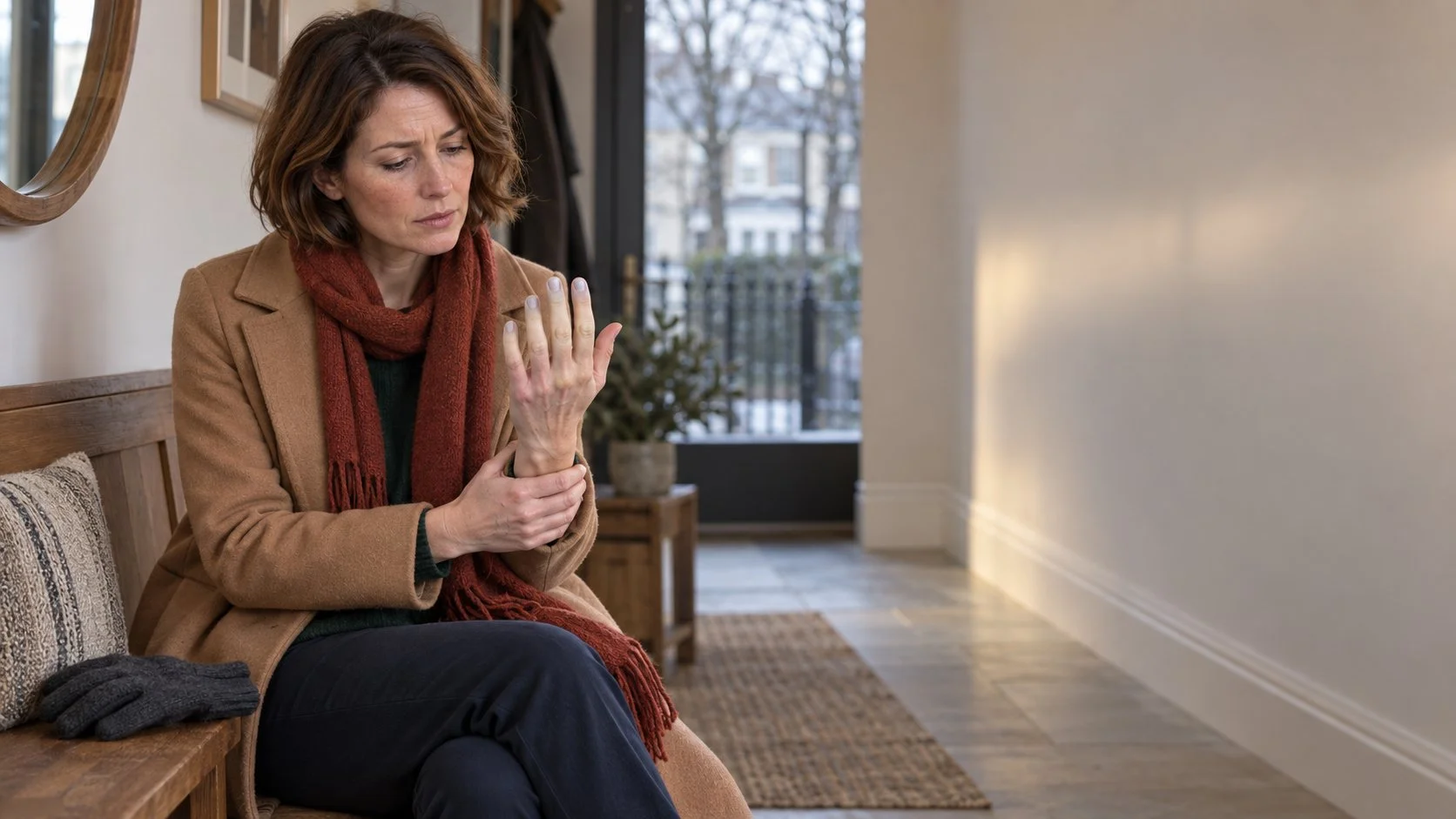
Raynaud’s phenomenon causes episodes of colour change, coldness, numbness, tingling or discomfort in the fingers or toes, often triggered by cold temperatures or stress.
Chilblains are painful or itchy red, purple or swollen patches that can develop after exposure to cold, particularly on the fingers and toes.
In many people, Raynaud’s and chilblains are not caused by a serious underlying condition. However, new, severe, worsening or unusual symptoms may need specialist assessment to check for an autoimmune or connective tissue disease.
Dr Animesh Singh offers consultant-led assessment in London for patients with Raynaud’s phenomenon, chilblains, cold-sensitive hands or feet, abnormal autoimmune blood tests or concern about an underlying rheumatological condition.

Dr Animesh Singh is a Consultant Rheumatologist and General Internal Medicine Physician at the Royal Free Hospital, where he is Clinical Lead for Rheumatology. At the Royal Free, Dr Singh works in a specialist rheumatology environment where Raynaud’s phenomenon, chilblains and connective tissue disease presentations are commonly assessed.
He offers private assessment in London for patients with Raynaud’s phenomenon, chilblains, cold-sensitive fingers or toes, abnormal autoimmune blood tests or concern about an underlying autoimmune condition. Raynaud’s is often primary, meaning it is not caused by another disease. However, in some patients it can be secondary to an autoimmune rheumatic condition such as systemic sclerosis, lupus, Sjögren’s syndrome, myositis or vasculitis. Specialist assessment helps identify whether symptoms are likely to be benign or whether further investigation, monitoring or treatment is needed.
Dr Singh is highly rated by patients on Doctify and Google, with more than 800 patient reviews.

Recognising Raynaud’s and Chilblains
Raynaud’s and chilblains often affect the fingers and toes, although symptoms can vary between patients. Some people experience temporary colour changes and cold sensitivity, while others develop painful skin changes or recurrent symptoms that need specialist assessment.
🔹 Colour Changes in Fingers or Toes
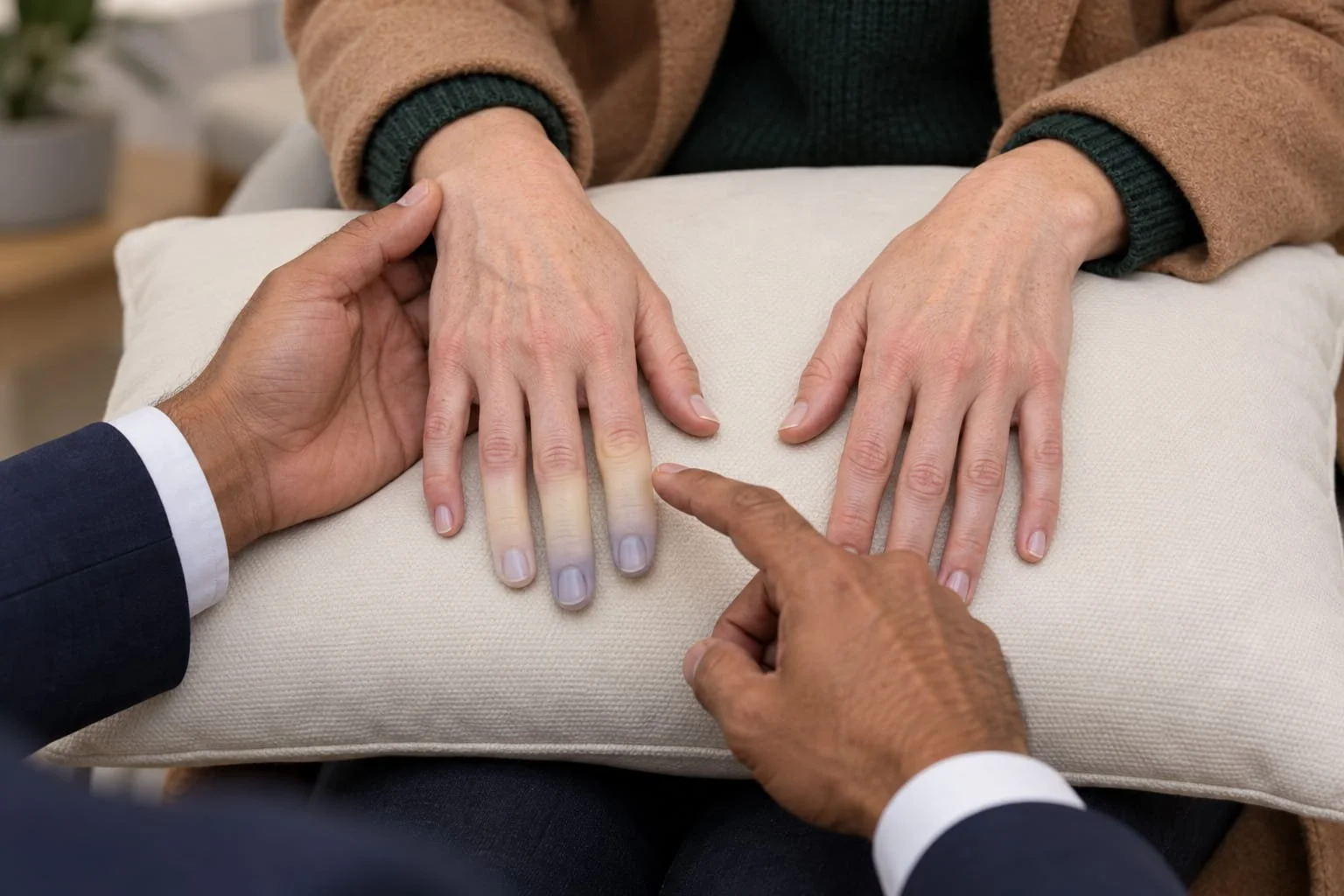
Raynaud’s commonly causes episodes of colour change in the fingers or toes.
The skin may turn:
white
blue
purple
red
These changes are often triggered by cold exposure or stress.
🔹 Pain, Numbness or Tingling
During an episode, Raynaud’s may cause:
numbness
tingling
throbbing
discomfort
pain as circulation returns
The pattern and severity of symptoms can help guide assessment.
🔹 Chilblains
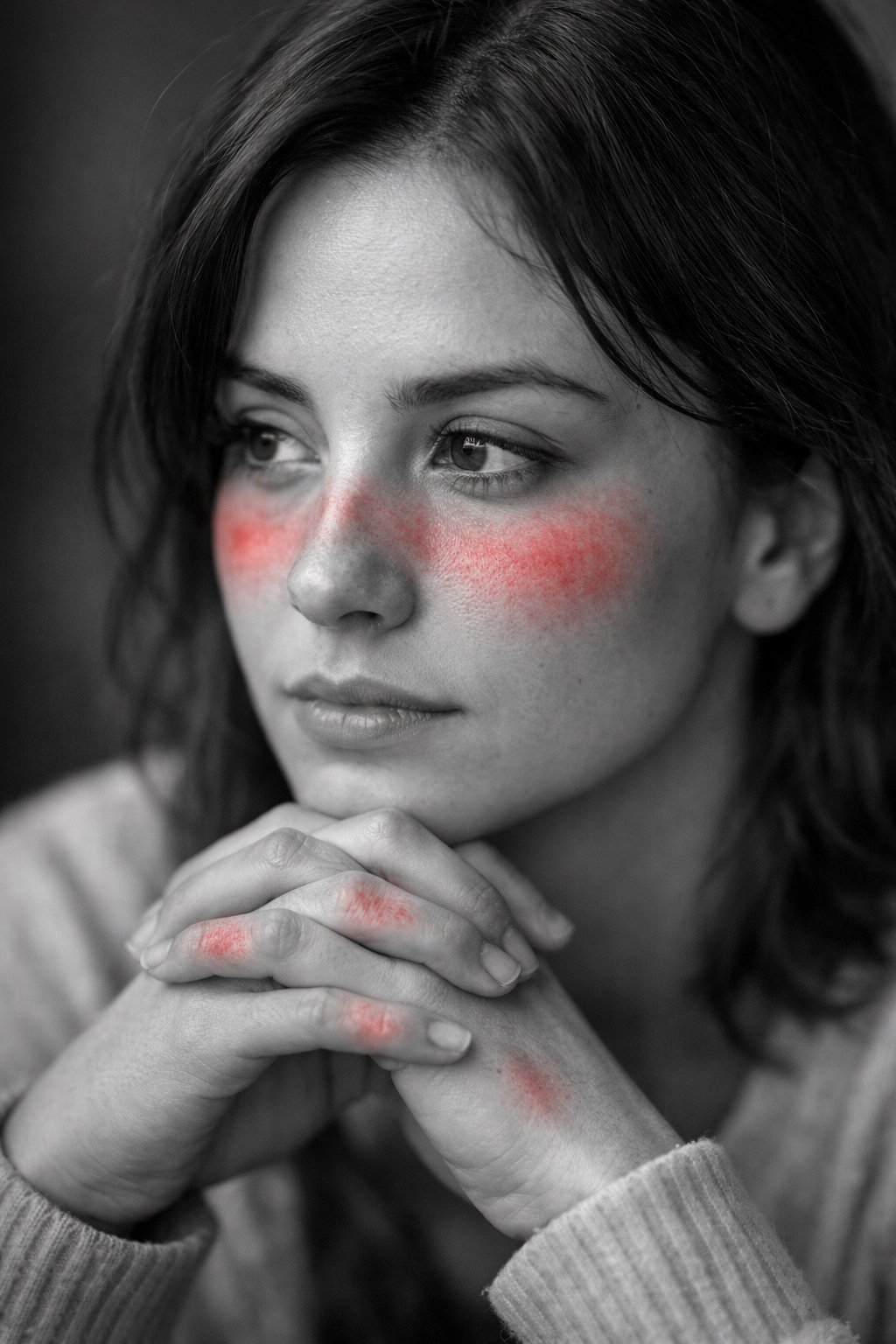
Chilblains are inflamed skin patches that usually occur after exposure to cold.
They may appear as:
red or purple patches
swollen areas
itchy or painful lesions
tender skin on the fingers or toes
🔹 Skin Breakdown or Ulcers
More severe circulation problems may cause:
sores
ulcers
slow-healing areas
cracks or skin breakdown
These symptoms should be assessed carefully, particularly if they are recurrent or worsening.
🔹 Features Suggesting an Autoimmune Cause
Raynaud’s may need further assessment if it is associated with:
new symptoms in adulthood
severe or worsening attacks
abnormal autoimmune blood tests
skin thickening
joint symptoms
rashes
ulcers or fingertip sores
symptoms affecting other parts of the body
A rheumatology assessment can help determine whether symptoms are primary or related to an underlying autoimmune condition.
Understanding Raynaud’s and Chilblains
Raynaud’s and chilblains are both related to cold sensitivity and changes in circulation, but they are not the same condition.
Understanding the pattern of symptoms can help decide whether reassurance, practical measures, treatment or further investigation is needed.
-
What Is Raynaud’s Phenomenon?
Raynaud’s phenomenon is a condition where small blood vessels in the fingers or toes temporarily narrow in response to cold, stress or other triggers.
This can reduce blood flow and cause colour change, numbness, tingling or discomfort.
-
What Are Chilblains?
Chilblains are inflamed areas of skin that can develop after exposure to cold.
They often appear as red, purple, swollen, itchy or painful patches, usually on the fingers or toes.
-
Are Raynaud’s and Chilblains the Same?
No.
Raynaud’s usually causes temporary episodes of colour change and altered sensation due to changes in blood flow.
Chilblains are inflammatory skin lesions that may last longer and can remain painful or itchy after cold exposure.
Some patients may experience both.
-
What Is Primary Raynaud’s?
Primary Raynaud’s means Raynaud’s occurs without an underlying autoimmune or connective tissue disease.
It is common and often begins earlier in life.
Primary Raynaud’s can be uncomfortable, but it is usually not associated with serious complications.
-
What Is Secondary Raynaud’s?
Secondary Raynaud’s means Raynaud’s occurs as part of another condition.
In rheumatology, this may include autoimmune conditions such as systemic sclerosis, lupus, Sjögren’s syndrome, myositis or vasculitis.
Secondary Raynaud’s may require further investigation, monitoring or treatment depending on the underlying cause.
-
When Can Raynaud’s Suggest an Autoimmune Disease?
Raynaud’s may need specialist assessment if it starts later in life, becomes severe, causes ulcers or occurs alongside other symptoms.
These may include:
skin thickening
joint pain or swelling
rashes
dry eyes or dry mouth
muscle weakness
abnormal autoimmune blood tests
A rheumatologist can help assess whether Raynaud’s is primary or whether it may be linked to an autoimmune rheumatic condition.
How Raynaud’s and Chilblains Are Assessed
Assessment aims to understand whether symptoms are likely to be primary, related to cold sensitivity alone or linked to an underlying autoimmune or connective tissue disease.
-
The consultation explores:
when symptoms started
triggers such as cold or stress
colour change pattern
which fingers or toes are affected
severity and frequency of attacks
whether there are chilblains, ulcers or skin breakdown
associated symptoms elsewhere in the body
-
Examination may include assessment of:
fingers and toes
skin changes
nailfold area
joints
circulation
features that may suggest connective tissue disease
-
Blood tests may be used to assess whether there is evidence of an autoimmune rheumatic condition.
These may include:
ANA
ENA antibodies
inflammatory markers
full blood count
kidney function
other tests depending on symptoms
Blood tests are interpreted alongside the clinical picture, not in isolation.
-
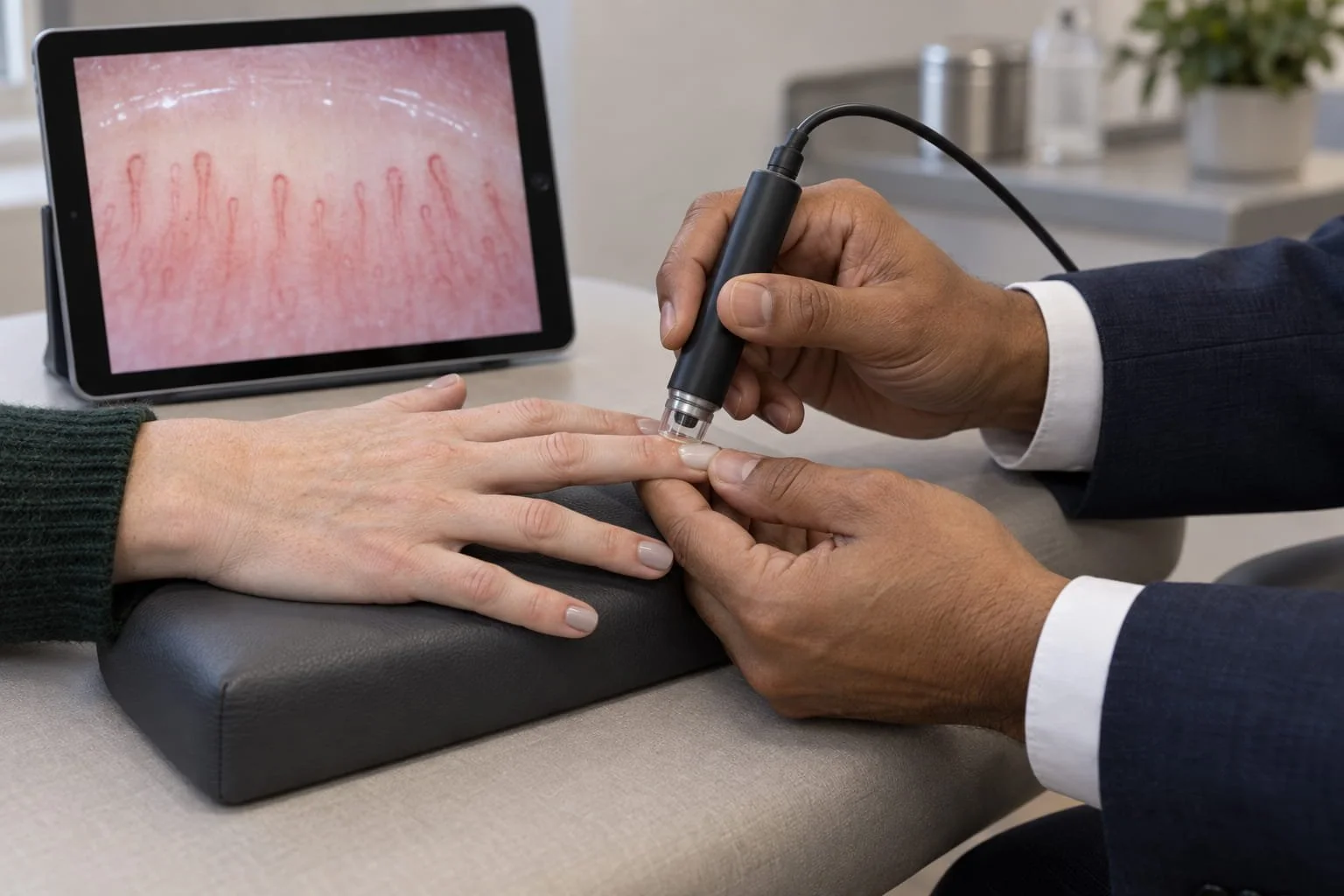
In some patients, the small blood vessels around the nails may provide useful clues.
Nailfold assessment can help identify patterns that may be seen in some connective tissue diseases, particularly systemic sclerosis.
Further vascular or imaging assessment may be considered depending on symptoms and examination findings.
-
After assessment, patients are given a clear explanation of whether symptoms are most consistent with:
primary Raynaud’s
chilblains
secondary Raynaud’s
possible autoimmune or connective tissue disease
another cause of circulation or skin symptoms
The plan may include reassurance, practical measures, treatment, monitoring or further investigations.
Treatment Options for Raynaud’s and Chilblains
Treatment depends on the severity of symptoms, whether there are complications and whether Raynaud’s is primary or linked to another condition.
The aim is to reduce attacks, protect the fingers and toes, manage skin symptoms and identify patients who need monitoring for autoimmune disease.
-
Practical measures are often the first step.
These may include:
keeping the whole body warm
wearing gloves and warm socks
avoiding sudden temperature changes
using hand warmers where helpful
avoiding direct handling of cold objects
managing stress-related triggers where relevant
-
General circulation measures may help reduce symptoms.
These can include:
avoiding smoking
reviewing medications that may worsen circulation
maintaining regular activity
protecting the skin from injury
treating cuts, cracks or broken skin promptly
-
If Raynaud’s symptoms are frequent, painful or disruptive, medication may be considered.
Commonly used treatments include calcium channel blockers such as nifedipine or amlodipine, which can help improve blood flow and reduce the frequency or severity of Raynaud’s attacks.
Treatment choice depends on factors such as:
symptom severity
blood pressure
other medical conditions
medication tolerance
whether Raynaud’s is primary or secondary
whether there are ulcers or skin complications
-
Chilblains are usually managed by reducing cold exposure and protecting affected areas.
Treatment may include:
warming measures
skin protection
treating cracked or broken skin
topical treatments where appropriate
medication in recurrent or severe cases
If chilblains are persistent, recurrent, severe or unusual, assessment may be needed to look for an underlying autoimmune or inflammatory cause.
-
Patients with severe Raynaud’s, fingertip ulcers or threatened tissue damage may need more specialist treatment.
In selected patients, treatments may include sildenafil or tadalafil, which can help improve blood flow by relaxing blood vessels.
In more severe cases, particularly where there are digital ulcers or threatened tissue damage, specialist treatments such as iloprost may be considered in appropriate hospital settings.
These situations require careful assessment because they may indicate secondary Raynaud’s or an underlying connective tissue disease.
-
If Raynaud’s is linked to an autoimmune condition, treatment may focus on the underlying disease as well as circulation symptoms.
Monitoring may be needed if there are signs of:
systemic sclerosis
lupus
Sjögren’s syndrome
myositis
vasculitis
The approach is personalised according to the diagnosis, severity of symptoms and risk of complications.
Key Message
Most Raynaud’s can be managed with practical measures and, where needed, medication. New, severe, worsening or complicated Raynaud’s should be assessed carefully to exclude an autoimmune or connective tissue disease.
Concerned About Raynaud’s, Chilblains or Cold-Sensitive Fingers and Toes?
If you have new, severe, worsening or persistent Raynaud’s symptoms, recurrent chilblains, fingertip sores or abnormal autoimmune blood tests, a specialist rheumatology assessment can help clarify whether symptoms are primary or linked to an underlying autoimmune condition.
Dr Singh offers consultant-led assessment for Raynaud’s phenomenon, chilblains, cold-sensitive fingers and toes, and symptoms that may suggest connective tissue disease.
When to Consider a Private Raynaud’s or Chilblains Appointment
A private rheumatology assessment may be helpful if you:
Have new Raynaud’s symptoms, especially if they started in adulthood
Have severe, worsening or frequent Raynaud’s attacks
Develop fingertip sores, ulcers or slow-healing skin changes
Have recurrent, persistent or painful chilblains
Have a positive ANA or abnormal autoimmune blood tests
Have Raynaud’s with joint pain, rashes, dry eyes, dry mouth, reflux or swallowing symptoms
Have skin thickening, tight skin or changes in the appearance of the fingers
Are concerned about systemic sclerosis, lupus, Sjögren’s syndrome, myositis or vasculitis
Need advice about treatment options such as nifedipine, amlodipine, sildenafil, tadalafil or iloprost
Would like a second opinion about whether symptoms are primary or linked to an autoimmune condition
Raynaud’s is often primary and not caused by another disease. However, new, severe, complicated or unusual symptoms should be assessed carefully to decide whether further investigation or monitoring is needed.

Raynaud’s and chilblains can be frustrating, uncomfortable and worrying, particularly when symptoms are new, severe or associated with abnormal blood tests.
Patients may seek a private rheumatology assessment for:
clarification of whether Raynaud’s is primary or secondary
assessment of recurrent chilblains
interpretation of positive ANA or other autoimmune blood tests
concern about systemic sclerosis or another connective tissue disease
advice about treatment options
review of fingertip sores, ulcers or skin changes
a second opinion after previous investigations
Dr Singh’s approach focuses on understanding the pattern of symptoms, examining for features of connective tissue disease and using targeted investigations where appropriate.
The aim is to provide clarity, reassurance where appropriate and a personalised plan for treatment, monitoring or further investigation.
Why See Dr Singh Privately?
Consultant Rheumatologist and General Internal Medicine Physician at the Royal Free Hospital
Clinical Lead for Rheumatology at the Royal Free Hospital
Works in a specialist Royal Free rheumatology environment where Raynaud’s phenomenon and connective tissue disease presentations are commonly assessed
Experience assessing Raynaud’s phenomenon, chilblains and cold-related circulation symptoms
Experience distinguishing primary Raynaud’s from Raynaud’s associated with autoimmune rheumatic disease
Specialist experience in connective tissue disease, including systemic sclerosis, lupus, Sjögren’s syndrome and myositis
Experience interpreting ANA, ENA and other autoimmune blood tests in clinical context
Experience developing personalised monitoring and treatment plans for patients with complex autoimmune symptoms
Highly rated by patients on Doctify and Google, with more than 800 patient reviews
Private Raynaud’s and Chilblains Appointments in London
Consultant-Led Raynaud’s and Chilblains Assessment Across London
Dr Singh offers private assessment for patients with Raynaud’s phenomenon, chilblains, cold-sensitive fingers or toes, abnormal autoimmune blood tests and symptoms that may suggest connective tissue disease.
Appointments are available for patients with:
Raynaud’s phenomenon
recurrent or painful chilblains
cold-sensitive hands or feet
fingertip sores, ulcers or skin changes
positive ANA or abnormal autoimmune blood tests
concern about systemic sclerosis, lupus, Sjögren’s syndrome, myositis or vasculitis
diagnostic uncertainty or requests for a second opinion
Self-pay and insured patients are welcome. Self-pay patients can book directly without a GP referral, while insured patients should check their policy requirements before booking.
Private Raynaud’s and chilblains assessments in Central London, near Harley Street, Marylebone and Oxford Circus.
This clinic may be suitable for patients seeking a central London location or those travelling from outside London.
Private Raynaud’s and chilblains appointments at the Royal Free Hospital in Hampstead.
This provides access to a major tertiary rheumatology environment where Raynaud’s phenomenon and connective tissue disease presentations are commonly assessed.
Private Raynaud’s and chilblains appointments in West London, convenient for Chiswick, Richmond, Ealing, Acton, Hammersmith and surrounding areas.
Common Questions About Raynaud’s and Chilblains
These answers cover common questions patients ask when seeking specialist assessment for Raynaud’s phenomenon, chilblains, cold-sensitive fingers or toes, and possible autoimmune causes.
-
Raynaud’s phenomenon is a condition where small blood vessels in the fingers or toes temporarily narrow in response to cold, stress or other triggers.
This can cause colour change, coldness, numbness, tingling or discomfort.
-
Chilblains are inflamed patches of skin that can develop after exposure to cold.
They may appear as red, purple, swollen, itchy or painful areas, usually on the fingers or toes.
-
No.
Raynaud’s usually causes temporary episodes of colour change and altered sensation due to reduced blood flow.
Chilblains are inflammatory skin lesions that may last longer and can remain itchy, painful or swollen after cold exposure.
Some patients experience both.
-
Raynaud’s is often primary, meaning it is not caused by another disease.
Primary Raynaud’s can be uncomfortable but is usually not dangerous.
However, severe, worsening, new-onset or complicated Raynaud’s should be assessed carefully, especially if there are ulcers, abnormal blood tests or symptoms suggesting autoimmune disease.
-
Primary Raynaud’s occurs without an underlying autoimmune or connective tissue disease.
It often begins earlier in life and may be triggered by cold or stress.
-
Secondary Raynaud’s occurs as part of another condition.
In rheumatology, this may include autoimmune diseases such as systemic sclerosis, lupus, Sjögren’s syndrome, myositis or vasculitis.
Secondary Raynaud’s may require further investigation, monitoring or treatment.
-
Raynaud’s may need specialist assessment if it:
starts in adulthood
becomes severe or worsening
causes fingertip sores or ulcers
affects one side more than the other
is associated with abnormal autoimmune blood tests
occurs with skin thickening, joint pain, rashes, dryness symptoms, reflux or muscle weakness
-
Yes.
Raynaud’s can occur in systemic sclerosis, also known as scleroderma.
Most people with Raynaud’s do not have systemic sclerosis, but certain patterns of symptoms, examination findings, blood tests or nailfold changes may suggest the need for further assessment.
-
Yes, in some cases.
Chilblains are often related to cold exposure, but recurrent, persistent, severe or unusual chilblains may sometimes be associated with autoimmune or inflammatory conditions.
Specialist assessment may be helpful if chilblains are recurrent or occur alongside abnormal blood tests or other symptoms.
-
Blood tests may be used to assess whether Raynaud’s is primary or linked to an autoimmune rheumatic disease.
These may include:
ANA
ENA antibodies
inflammatory markers
full blood count
kidney function
other tests depending on symptoms
Blood tests are interpreted alongside the clinical picture, not in isolation.
-
Nailfold capillaroscopy is an assessment of the small blood vessels near the fingernails.
It can help identify patterns that may be seen in some connective tissue diseases, particularly systemic sclerosis.
Not everyone with Raynaud’s needs this test, but it can be useful in selected patients.
-
Treatment depends on severity and whether Raynaud’s is primary or secondary.
Management may include:
cold protection
trigger avoidance
stopping smoking
reviewing medications that may worsen circulation
medication such as nifedipine or amlodipine in selected patients
More severe Raynaud’s may require specialist treatment.
-
Patients with severe Raynaud’s, fingertip ulcers or threatened tissue damage may need more specialist treatment.
In selected cases, treatments such as sildenafil, tadalafil or iloprost may be considered depending on the clinical situation and treatment setting.
-
Chilblains are usually managed with cold protection, warming measures and skin care.
Treatment may include:
avoiding sudden cold exposure
keeping hands and feet warm
protecting affected skin
treating cracked or broken skin
topical treatments where appropriate
medication in recurrent or severe cases
Persistent or unusual chilblains may need further assessment.
-
Primary Raynaud’s often cannot be “cured” permanently, but symptoms can often be improved with practical measures and, where appropriate, medication.
If Raynaud’s is secondary to another condition, treatment may also focus on the underlying disease.
-
Yes.
A second opinion may be helpful if:
symptoms are worsening
tests are abnormal
there is uncertainty about primary or secondary Raynaud’s
there are ulcers or skin changes
you are unsure about treatment options
you are concerned about an autoimmune diagnosis
-
Where available, bring:
previous blood test results
autoimmune investigation results
photographs of colour changes or chilblains
clinic letters
medication list
details of previous treatments
symptom timeline
Photographs can be particularly helpful because Raynaud’s attacks and chilblains may not be visible during the consultation.
-
A GP referral is not required for self-pay appointments.
If you are using private medical insurance, please check your insurer’s requirements before booking.
-
Yes. Dr Singh sees insured patients.
Please check your insurer’s requirements before booking and bring any required authorisation details.
-
Useful patient resources include:
Information and support for people affected by Raynaud’s, systemic sclerosis and related conditions.
Information about the diagnosis and management of Raynaud's.
General information about Raynaud’s phenomenon and chilblains.
These resources can help you understand your symptoms and prepare questions for your consultation, but they should not replace personalised medical advice.

Ready to Arrange a Specialist Raynaud’s or Chilblains Assessment?
If you have Raynaud’s phenomenon, recurrent chilblains, cold-sensitive fingers or toes, fingertip sores, abnormal autoimmune blood tests or concern about an underlying connective tissue disease, a specialist rheumatology assessment can help clarify the cause and guide the next steps.
Dr Singh provides consultant-led Raynaud’s and chilblains assessment in London, combining specialist rheumatology expertise with experience in autoimmune and connective tissue disease presentations.
Related Autoimmune Conditions
Raynaud’s and chilblains can occur on their own, but they may also be seen with autoimmune rheumatic conditions.
If your symptoms suggest a wider autoimmune pattern, these pages may also be helpful.